Now we'll get to see if that argument is true or false.
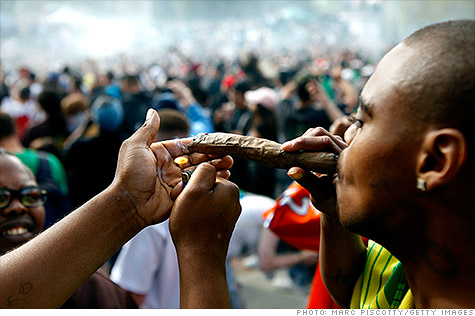
Voters in Washington and Colorado passed ballot initiatives Tuesday to legalize marijuana for recreational use, the biggest victory ever for the legalization movement.This is probably where the issue belongs; with the states. Section 8 of the Constitution gives the federal government the power to regulate trade between the states, so the federal government could keep interstate sales of cannabis illegal. However, the states are the "laboratories of democracy". If one state enacts a law and it turns out well, other states will naturally follow suit. If it doesn't, they won't. That limits the damage done by any one law to the state that enacted the law.
"The significance of these events cannot be understated," said NORML, a pro-legalization organization, in a news release. "Tonight, for the first time in history, two states have legalized and regulated the adult use and sale of cannabis."
But in many ways, it's just the beginning of the battle. Marijuana is still illegal in the eyes of the federal government, which overrules states' rights. [States do not have rights. People have rights, states have powers. ~ OS]
"The voters have spoken and we have to respect their will," said Colorado Gov. John Hickenlooper, in a statement. "This is a complicated process, but we intend to follow through. That said, federal law still says marijuana is an illegal drug ,so don't break out the Cheetos or goldfish too quickly."
The voter approval of legal weed in Colorado and Washington could lead to a Supreme Court battle with the federal government, according to Jeffrey Miron, senior lecturer of economics at Harvard University and a senior fellow at the Cato Institute, where he has conducted economic studies on nationwide drug legalization."[The feds] will do whatever they can to interfere with marijuana legalization in any state," said Miron on Tuesday, before the initiatives passed.
"Liberals" and libertarians have been telling us for decades that this would work. Now we'll see.
In other news, who would've thought that Oregon, of all places, would vote "no" on a similar measure?

No comments:
Post a Comment