Showing posts with label Health. Show all posts

Friday, December 26, 2014

Strength Training Beats "Cardio" for Fat Loss

We know that strength predicts health and longevity much more accurately than BMI.  And we know that - within a surprisingly broad range - body fat doesn't make much of a difference to health.  Now we have further evidence that strength training is more effective than "cardio" at keeping body fat within healthy levels. 

2014 CrossFit Games Masters Competition: Deadlift Ladder Event
...weight training is the most effective way of keeping abdominal fat in check, compared to other activities such as running or cycling. 
Researchers at the Harvard School of Public Health measured the activity levels of over 10,000 men aged 40-plus, monitoring their weight and waist circumference over a 12-year period.
2014 CrossFit Games Masters Competition
I'm glad that the researchers chose to conduct their study on men 40 and older, although I wish they'd conducted the study on women, too.  Most researchers conduct fitness studies on healthy young men - typically in their 20s.  People in their 20s don't need as much help staying healthy as people in their 40s.  And the kind of physical activity that produces improvement in a young, healthy 20-year-old may not work for an older person, because the older person can't recover as quickly as a younger person.  As a general rule, older people simply can't handle the kind of training volume younger people can.
They found that those men who spent an extra 20 minutes a day weight training gained less abdominal weight over the course of the study than men who increased the amount of time they spent doing aerobic exercise.
2014 CrossFit Games Masters Competition

 Guess what's even better than strength training alone.
Combining weight training with aerobic exerise led to even better results, the study found. 
Frank Hu of Harvard School of Public Health said: "This study underscores the importance of weight training in reducing abdominal obesity, especially among the elderly. 
"To maintain a healthy weight and waistline, it is critical to incorporate weight training with aerobic exercise."
2014 CrossFit Games Masters Competition

It seems intuitively obvious, doesn't it?  Our bodies are designed to move themselves slowly over long distances, quickly over short distances, and to move heavy external loads over even shorter distances.  It simply makes sense to train the body the way it's designed to work, as opposed to limiting the body to only one time domain and/or modality.

Now, guess which training program covers all those time domains and modalities.  That's right.  CrossFit.

2014 CrossFit Games Masters Competition: Sprint Sled Event.

Unfortunately, although the article's title is "Why weight training is better for your waistline than running", it doesn't actually explain why.  The following video does.  I encourage you to watch the whole thing, but you can skip to the actual explanation at 7:28.


The short version is that when you do "cardio", you burn fat during your training session.  So, if you do "cardio" for an hour, you burn fat for an hour.  When you train for strength, and even more so when you perform high intensity training like CrossFit, you burn sugar during the training session, but you burn fat for hours following the training session as you recover.

The photos I linked above are from the Masters Competition of the 2014 CrossFit Games.  All the athletes that compete in the Masters Division are in their 40s, 50s and 60s.  The video below is a good summary of the competition, and the kind of training these athletes do.


Stay healthy, my friends.

Tuesday, October 21, 2014

Vegetarians & Vegans Have Lower Sperm Counts

I'm sure you're as shocked at this confirmation of stereotypes as I am.
Researchers at Loma Linda University Medical School, in southern California, embarked on a four-year project to find out how diets affect sperm.
...
Vegetarians and vegans had significantly lower sperm counts compared with meat eaters, 50 million sperm per ml compared with 70 million per ml. 
They also had lower average sperm motility – the number of sperm which are active. Only one third of sperm were active for vegetarians and vegans compared with nearly 60 per cent for meat eaters. 
Those are significant differences.  The average vegetarian in this study produced 16.7 million viable sperm per ml, compared to 42.0 million for the meat eaters.  That means the vegetarians produced about 60% less viable sperm per ml when compared to the meat eaters.

Even if a man isn't interested in procreating, sperm counts and sperm motility are indicators of a man's overall health, especially his testosterone levels.  Why might vegetarians and vegans produce less viable sperm than their meat eating peers?
One factor could be diets rich in soy, the researchers hypothesis [sic.]. Soy contains phyto-oestrogens which have similar properties to the female hormone oestrogen. 
“The theory that we have come up with is that vegetarians are replacing meat with soy, which contains phytooestrogens and could be affecting fertility,” added Dr Orzylowska. 
“For children who have grown up with those kind of diets, it may have impacted on sperm quality from puberty. 
That seems like a terrible thing to do to a growing boy.  The researchers propose another possible reason.
The researchers also think that vegetarians and vegans may be deficient in vitamin b12. 
The article also references another possible reason from a separate Harvard study.
“We found men who had the highest intakes of fruit and vegetables high in pesticide residues tended to have lower sperm quality, specifically lower total normal count and mobile count” said Dr Chavarro.
My unscientific observation indicates that vegetarians and vegans tend to buy into the "organic" food (as opposed to inorganic food?) hype.  That might actually reduce the amount of pesticide residue they ingest, which would make the pesticide hypothesis invalid.

Every time I read about one of these studies comparing vegetarians to the general population, I wonder how they would compare to the strength training, paleo or primal eating segment of the population.  My unscientific observation also indicates that vegetarians and vegans tend to live healthier lifestyles than the overweight, sedentary majority of the population.  It seems more useful to compare them to other health-conscious people, rather than to people who place little to no emphasis on health and fitness.  I suspect that the differences referenced in the article would be even greater if the study compared vegans and vegetarians to paleo or primal men.

Humans are omnivores.  We're designed to eat a wide variety of foods from both vegetable and animal sources.  One can certainly live on a diet that deprives the body of one or the other, but it's far from optimum.

Meanwhile, back on the subject of stereotypes...


Heh!

Friday, September 19, 2014

Hand Grip Strength and Longevity

I wrote earlier that the Muscle Mass Index predicts longevity far more effectively than the far more commonly used Body Mass Index (BMI).  A couple days ago, the NYT published an interview in which Warren Sanderson, a professor of social and behavioral sciences at Stony Brook University, explains that hand grip strength predicts longevity.
Hand-grip strength is an amazingly good predictor of future rates of mortality and morbidity, or sickness. It’s been measured for individuals in surveys across the world. We now have comparable data on about 50,000 people from the U.S., many European countries, Japan, South Korea, China. A substantial body of research suggests that this can be used as a reliable predictor of aging.
Here is the abstract from the study referenced in the NYT article.
BACKGROUND AND PURPOSE: One use of clinical measures is the prediction of future outcomes. The purpose of this systematic review was to summarize the literature addressing the value of grip strength as a predictor of important outcomes. 
METHODS: Relevant literature was located using 4 bibliographic databases, searching article reference lists, and perusing personal files. 
RESULTS: Forty-five relevant research articles were found. The research involved both healthy subjects and patients; it tended to focus on middle-aged and older adults. The primary outcome addressed was mortality/survival (24 articles), but disability (9 articles), complications and/or increased length of stay (12 articles), and other outcomes were also examined. Low grip strength was shown consistently to be associated with a greater likelihood of premature mortality, the development of disability, and an increased risk of complications or prolonged length of stay after hospitalization or surgery. 
CONCLUSIONS: Given its predictive validity and simplicity, dynamometrically measured grip strength should be considered as a vital sign useful for screening middle-aged and older adults. 
It's frustrating that Prof Sanderson doesn't even bother to ask what seems to me an obvious question: why does hand grip strength predict longevity and morbidity so well?

Aren't researchers supposed to ask questions like that?  Isn't that a big part of research in any field?  And while we're at it; aren't such "why" questions a big part of journalism?  The interviewer didn't bother to ask the obvious question either!
635 lb deadlift at the 2014 CrossFit Games

Not that anyone asked me (when have I ever let that stop me?), but I think I know the answer, and it goes back to the Muscle Mass Index.

As a general rule, a person who is stronger overall will have more hand grip strength than a person who is weaker overall.

For example, a person with a 500 lb deadlift 1-rep-max has a far stronger grip than a person with a 200 lb deadlift 1-rep-max, because the deadlift requires the lifter to grip the bar to lift it off the ground.  But the 500 lb deadlifter's entire body is also stronger than that of the 200 lb deadlifter, because the deadlift employs pretty much every muscle in the body.  Consequently, the 500 lb deadlifter has greater muscle mass than the 200 lb deadlifter.

That's why hand grip strength predicts health and longevity.  It's not because fit, healthy people's hands are stronger than frail, sickly people's hands, it's because fit, healthy people's entire bodies are stronger than frail, sickly people's bodies.

Prof Sanderson, however, doesn't bother to ask the question, so he never arrives at the answer.  Instead, he makes the following silly - and potentially dangerous - statement.
Measuring hand-grip strength is very simple and cheap. We think every primary care doctor should have a dynamometer in their office. At every visit, the doctor could check grip strength for older patients. If someone was in the 45th percentile for their age and the measurements were stable, great. But if that person suddenly dropped to the 25th percentile, then that’s a sign that the doctor should look seriously at what might be going on. 
We view this in a larger context. There are going to be more measures than this one. We want to look next at measures of lower-body strength. It may very well be a measure that looks at how long it takes someone to rise from a chair. Then, we will have an upper-body measure and a lower-body measure, and we can compare the two in terms of how aging goes. We envision one day that physicians will have standard age-related tables for these measures and chart their patients’ progress, just as they do with height and weight for children.
Source
It's silly because there is no need to measure upper and lower body strength separately.  A full-body lift, like the deadlift, measures the strength of the entire body simultaneously.

It's dangerous, because if doctors really did follow Prof Sanderson's recommendation and started testing their aging patients' grip strength, they'd also require their patients to do dumb things like squeezing hand grip strengthening devices to improve their health and longevity.  Again, the point is not that stronger hands = longer life.  The point is that stronger body = longer life, and it just so happens that stronger body also = stronger hands.

A far better test would be the deadlift, because it actually measures what matters - the overall strength of the entire body.  An even better measuring tool would be the squat, because it requires more mobility and flexibility than the deadlift.  A person that can continue to squat to depth well into old age will likely be far more independent, and therefore have far better quality of life, than one who can't.

Ideally, the test would be the CrossFit total - squat, press and deadlift.  However, that much testing is probably not necessary.  The squat or deadlift alone would do.  And if doctors adopted that kind of test, it would encourage a lot more people to train for full-body strength, which is the most useful thing a person can do to improve health and fitness in the long run.

Some will protest that the elderly can't lift weights.  It's too dangerous for them, they'll claim.  To these critics I say, watch this 73-year-old grandmother with a deadlift PR of 181.5 lb.


You can bet Ms Sandra would crush the hand grip strength test.

Monday, August 18, 2014

Matt Chan Takes a Bad Spill

Talk about unknown and unknowable!  Multiple-time CrossFit Games athlete, Matt Chan, and his wife Cherie (one of the coaches at my Level 1 course) went on a seemingly benign mountain bike ride and Matt took a spill that almost killed him.


Check out the graphic scene at 4:15!

My favorite quotes from the video:
Cameraman: You're definitely the most jacked dude on Earth using a walker.
Cherie: That's what the nurses thought, too.
...
Cherie: My mother-in-law said, "This is why you guys do CrossFit, because when something like this happens - and you never know when it's going to happen - you can bounce right back, because you're so much stronger.  Look how much better he can support himself because his upper body is so strong."
You got it, Mama Chan.

Monday, July 14, 2014

Muscle Mass Predicts Longevity Better Than BMI

I'm on record stating that BMI is a crock.  I arrived at that conclusion through reasoning, not scientific research.  But now there is scientific research that demonstrates that BMI is a poor predictor of longevity, and that muscle mass is a better predictor of longevity.
Doctors routinely measure a patient's body mass index, or BMI. And if that weight-to-height ratio points to obesity, the doc might prescribe exercise, to shed the extra pounds. But when it comes to longevity, a focus on weight loss may be misplaced. Because BMI isn't actually a very reliable indicator of life span. A more useful measure, some physicians say, might be muscle mass. 
Researchers analyzed BMI and muscle mass data from more than 3,600 seniors in a long-term study. And they tracked which seniors had died, a decade later. Turns out BMI wasn't much good at predicting chance of death.

But muscle mass was: more muscle meant better odds of survival. The study appears in The American Journal of Medicine. [Preethi Srikanthan and Arun S. Karlamangla, Muscle Mass Index as a Predictor of Longevity in Older-Adults]
From the abstract:
Objective
Obesity (as defined by body mass index) has not been associated consistently with higher mortality in older adults. However, total body mass includes fat and muscle, which have different metabolic effects. This study was designed to test the hypothesis that greater muscle mass in older adults is associated with lower all-cause mortality. 
Methods
All-cause mortality was analyzed by the year 2004 in 3659 participants from the National Health and Nutrition Examination Survey III who were aged 55 years or more (65 years if women) at the time of the survey (1988-1994). Individuals who were underweight or died in the first 2 years of follow-up were excluded to remove frail elders from the sample. Skeletal muscle mass was measured using bioelectrical impedance, and muscle mass index was defined as muscle mass divided by height squared. Modified Poisson regression and proportional hazards regression were used to examine the relationship of muscle mass index with all-cause mortality risk and rate, respectively, adjusted for central obesity (waist hip ratio) and other significant covariates. 
Results
In adjusted analyses, total mortality was significantly lower in the fourth quartile of muscle mass index compared with the first quartile: adjusted risk ratio 0.81 (95% confidence interval, 0.71-0.91) and adjusted hazard ratio 0.80 (95% confidence interval, 0.66-0.97). 
Conclusions
This study demonstrates the survival predication ability of relative muscle mass and highlights the need to look beyond total body mass in assessing the health of older adults.
I probably shouldn't have read the comments to the Scientific American article, but I did, and they are sadly typical of the kind of ignorance, laziness and plain stupidity one encounters on the internet.
Jerzy v. 3.0. March 21, 2014, 7:23 AM
Low muscle mass in elderly people may mean that all their systems are falling already. Questionnaire about exercise might be more meaningful. Correlation doesn't imply causation, sorry.
jtdwyer to Jerzy v. 3.0. March 21, 2014, 7:34 AM
Exactly! What's most important here is that BMI is a (loosely) quantifiable indicator of lifestyle health for children and young adults - for whom lifestyle factors contribute most greatly to long term health and survival.
Unfortunately, increasing muscle mass in the elderly is not likely to reduce morbidity! 
The responders obviously didn't read the abstract, because the answer to their objection about frailty in old age, near death is right there where I highlighted it in bold.  The researchers measured the subjects' muscle mass index when they were 55 (men) or 65 (women) years old between 1988 and 1994, not when they died.  They analyzed the causes of mortality in 2004.  They also eliminated all subjects who were underweight in the first two years after the survey to eliminate individuals whose "systems are failing already".

Worse still, the responders obviously didn't even bother to read the article to which they responded.
There's no cause-and-effect here—just correlation for now. But study author Preethi Srikanthan, of U.C.L.A., has this recommendation: "Get up and start moving. Focus on trying to maintain the maximum amount of resistance training that you can, and stop worrying so much about dropping calories." Which could take a little weight off your mind, too.
Jeeze.

Anyway, Dr Srikanthan's advice isn't all that helpful.  How exactly does one "get up and start moving" and "focus on trying to maintain the maximum amount of resistance training that you can"?

People gain muscle and strength most easily in their teens, twenties and thirties.  After that, a person's hormone profile makes it increasingly more difficult.  The solution then, is to increase ones muscle mass as much as healthfully possible while young and maintain it as much as possible as one ages.  But how?  And what if one is already past 50?  Is it too late?

One shouldn't expect a physician to have the answer (it's not their specialty) and Dr Srikanthan doesn't, but that's OK, because Mark Rippetoe does.
Strength — as well as a tolerance for childish nonsense — is the thing we all lose as we age. Squatting down, standing back up, putting things overhead, pulling things up the driveway, loading the groceries, wrestling with the grandkids, teaching the dog who’s boss, mowing the yard, putting the broken lawnmower in the truck again: simple physical tasks we took for granted years ago are often problems for older, weaker people, as well as a source of potential injury that can be expensive and debilitating. 
Source: PJ Media
For most of us, this happens because of inactivity. If you do not use your muscles to produce enough force to maintain their ability to do so, it shouldn’t be surprising that they become less capable of doing it. And walking, running, riding a bicycle — physical activities whose performance is not limited by strength for even moderately active people — cannot increase or even maintain strength.
So, how does one fix this problem?
The absence of skeletal loading is typical for older people, since we now hire the heavy work done instead of doing it ourselves. And just like muscles, bones adapt to the “stress” of being unloaded by getting thinner and less dense. Running is not a weight-bearing exercise in the sense that strength training is. It’s just a “you-bearing” exercise, and the impact of repeated footfalls affects only the legs. In fact, people sensitive to impact have far fewer problems with the static nature of barbell training than they do the repeated impacts of running. A barbell sitting on the shoulders or held overhead in the hands loads the skeleton in a way that other exercises cannot do, and a strength training program always results in the preservation of bone density. Coupled with the strength necessary to control your balance, this is the best insurance against the tragic and often fatal pelvic fracture that an older person can acquire. 
Source: PJ Media
But the loss of strength can be slowed down quite a bit, and for older people who have never trained before, a vast amount of improvement can take place in a relatively short span of time. I have trained many older competitive “masters” lifters who started out as disinterested gym members and then experienced a sudden change of attitude when their strength doubled with six months of lifting weights. These people will tell you about the difference strength training — not running — has made in their lives. 
Here's a quote from the 3rd edition of Starting Strength: Basic Barbell Training.
Weight training is precisely scalable to the age and ability of the individual lifter... We have 11-pound bars - or even broomsticks - for kids to start lifting with... This logic also applies to every group of people who might be viewed as a "special population" - the frail elderly, people with skeletal and muscular disease, the completely sedentary, the morbidly obese... In fact, the adaptation to weight training is precisely the adaptation that these special populations need... (pages 322-323)
For further details, read the rest of Rippetoe's articles on PJ Media, then get the book.

Finally, the subject of BMI reminded me of this.
This is Jason Khalipa.

Jason Khalipa BMI = 31 (obese)

See what I mean?  BMI is a crock.


Monday, July 7, 2014

Americans Dump Margarine, Return to Butter

Butter's shifting fortunes also reflect the vicissitudes of thinking on healthy eating that rattle the national diet. Families for decades opted for vegetable spreads because of concerns about butter's high concentration of saturated fat, only to be told more recently that the trans fats traditionally contained in margarine are just as unhealthy. Many Americans also have altered their thinking on how important reducing all fat is for controlling weight.
...
Courtney Shanower, a 33-year-old pizza-restaurant owner in Sugarcreek, Ohio, said she grew up in a family that bought tub margarine. "I didn't use butter for a long time because I was weight conscious," said Ms. Shanower, a mother of two. "When I turned 30 I started thinking about osteoporosis and calcium and thought I'm not getting the nutrition I need. So I stopped counting calories, and started thinking about nutrition."
In reference to the section in bold above, there was never any need to eliminate saturated fat due to health concerns, because there is no correlation between saturated fat and heart disease.
...the new research, published on Monday in the journal Annals of Internal Medicine, did not find that people who ate higher levels of saturated fat had more heart disease than those who ate less. Nor did it find less disease in those eating higher amounts of unsaturated fat, including monounsaturated fat like olive oil or polyunsaturated fat like corn oil.
...
The smaller, more artery-clogging particles are increased not by saturated fat, but by sugary foods and an excess of carbohydrates, Dr. Chowdhury said. “It’s the high carbohydrate or sugary diet that should be the focus of dietary guidelines,” he said. “If anything is driving your low-density lipoproteins in a more adverse way, it’s carbohydrates.”
As for trans fats, like margarine...
The researchers did find a link between trans fats, the now widely maligned partially hydrogenated oils that had long been added to processed foods, and heart disease. But they found no evidence of dangers from saturated fat, or benefits from other kinds of fats.
You can read a lot more details at the link.

Government agencies, like the US Department of Agriculture, and non-governmental organizations, like the American Heart Association, badgered Americans into replacing natural saturated animal fats (like butter) with artificial trans fats derived from oils extracted from vegetable seeds (like margarine) because the vegetable-based oils were supposedly healthier.  Now it turns out that the animal fats the USDA and AHA demonized (and continue to demonize) have no effect on heart disease, and the trans fats they pushed cause heart disease.

The USDA and AHA also badgered (and continue to badger) Americans into adopting low fat, high carbohydrate diets, and it turns out that excessive carbohydrate intake causes heart disease.

The WSJ article I cited above includes a chart I found very interesting.

Source: WSJ

Compare Americans' consumption of butter and margarine with their propensity for obesity.

Source: USA Today

Now Compare to these charts from the AHA's latest report on heart health in the US.

Source: AHA

Source: AHA

Americans decreased their butter consumption and increased their consumption of margarine (as per USDA and AHA recommendations), and got fatter and suffered more heart disease.  That doesn't mean that the USDA and AHA recommendations caused Americans to get fat and suffer more heart disease, but they definitely did not prevent what they were supposed to prevent.

So much for the experts.


Friday, June 27, 2014

Isolation Movements Waste Your Time

Hang around people in the fitness industry long enough, and you'll undoubtedly hear/read the term "muscle imbalance".  Muscles apply tension on joints, and that tension keeps joints operating like they're supposed to.  But some athletic pursuits strengthen the muscles that apply tension on one side of a joint more than their opposite counterparts.  That's an imbalance.

For example, long distance runners' hamstrings are often weaker than their quadriceps.  The difference in tension between the hamstrings and quads often results in knee injuries after years of running.

The conventional method of balancing the strength of muscle groups acting on opposite sides of a joint is to isolate the muscle groups and exercise them individually, often using machines.  Most physical therapists would advise a long distance runner with weak hamstrings to strengthen the quads and hamstrings separately with leg extensions and leg curls.


But that brings up a fairly obvious question.  Or, it should, anyway.  How does an athlete performing leg extensions and leg curls know if  his/her quads and hamstrings are balanced?  How does he/she know if they are operating as they are designed to?  Put simply, he/she can't know.  It's impossible.  Because the movements he/she is performing are movements his/her body is not designed to perform.  In fact, the human body can't perform those movements without the assistance of machines that were invented in the 1970s.

So, how can an athlete strengthen his/her quads and hamstrings evenly and help prevent knee injuries?

Simple.  Squat.

Unlike leg extensions and leg curls, the squat is a natural movement our bodies are designed to perform.  Because of that, when an athlete performs a squat correctly, all the muscles involved in the squat are automatically balanced.  The athlete doesn't need to think about which muscles to "fire" (I hate that term, by the way) because his/her nervous system does it instinctively.

You can find the following illustration on page 19 of the third edition of "Starting Strength".

Figure 2-11, page 19, Starting Strength Basic Barbell Training 3rd Edition

It demonstrates how the quads and hamstrings work together to help perform the squat.  As helpful as this illustration is, however, I recently ran across a video that I think makes this point much more effectively.


In the video clip above, CrossFit athlete Brooke Ence performs the squat with excellent technique, and you can watch the quads and hamstrings engage, contract and stretch in perfect concert with each other.  And it's not just her quads and hamstrings.  Her hip adductors, tensors, glutes, etc. work together to flex and extend her hips and keep her knees pointing over her toes.  Simultaneously, her abs and the muscles in her back maintain proper spine alignment and thus transfer force from the ground all the way to the bar.  And every muscle from the bar to her feet works to keep the weight balanced and centered over her feet.

That's why isolation movements waste your time.  It would take hours to train all those muscle groups by isolating each of them.  A 5x5 set of squats does it in minutes.  And even if you did manage to train all those muscle groups by isolating them, you'd never know if they were really in balance with each other.

Are there cases in which isolation movements are not a waste of time?  Sure.  Competitive body builders need isolation movements to compete in their sport.  Besides, they get judged on appearance, not performance.  Also, if an athlete is injured and can't perform compound movements like the squat, it's better to do something than nothing.

If, however, an athlete is not injured and wants to improve performance and prevent injury, compound movements - squats, deadlifts, presses, the Olympic lifts, etc. - are the way to go.  For such an athlete, isolation movements are an unnecessary, counterproductive waste of time.


Monday, May 26, 2014

Even More Rippetoe on PJ Media... and the NYT!

I've really been slacking on writing.  Hey, it's a hobby, not a job.  Let's get to the important stuff.  As always, follow the links to read the articles in their entirety. 

First, Coach Rip explains the difference between training and working out.
From PJ Media
That makes “working out” the same thing as “exercise.” The term “exercise” best describes a physical activity performed for the sake of the effect it produces on your body today — right now — or immediately following the workout. If you’re just exercising, the workout itself is the point. Yoga, Pilates, cardio on the treadmill, a group class of any kind — basically punching your time card at the gym is “exercise.” For most people, “exercise” probably involves doing the same thing in the gym every time you go, because the effect is predictable. You want to get hot, sweaty, and tired, because it makes you feel that something positive has occurred. And it has. For many people, the acute effect of “exercise” is all that is necessary for an improvement in their physical wellbeing. 
The modern fitness industry is built exclusively around the “exercise” model.
...
“Training” is the process of moving from one state of physical preparedness to another. The individual workouts that compose the elements of the process are important not in and of themselves, but because their cumulative effect accomplishes a specific definable physical goal. 
To an athlete who is “training” for a performance goal, be it a marathon or a weightlifting meet, the accumulated, increasing stress that characterizes “training” must be specific to the performance goal. This means that “training” must be carefully planned in advance to produce a specific adaptation at a specific point in time. This planning differentiates “training” from “exercise.”
 In other words, training is physical activity with a purpose - an end goal - in mind.  I'd add that, even if you're not a competitive athlete, even if you don't plan to run a marathon or compete at a weightlifting meet, training with a purpose is the way to go.  Set a reasonable goal (even if it seems arbitrary at first) and train for it.  Achieving a goal is motivating, and will help you stick with your program.

I disagree with Coach Rip on one point.
Corporate gyms are counting on you to come in about three days per week, mess around on the machines for 20 minutes, ride the treadmill while you watch television for 30 minutes, hit the sauna, the shower, and then the parking lot. They want you there for an hour, they want you to bring in a friend to sign up, and then they want you gone.
Actually, corporate gyms count on you to not come in.  Their business model is built on the fact that as many as 4/5 people don't use their gym memberships.  If everyone with a gym membership actually used them, the gyms wouldn't have enough room for their clients.  That's how they keep their membership fees low.

Next, Coach Rip explains why you shouldn't be doing LSD.  No, not acid (although that too is advisable)!  He means, "long, slow distance", which is - traditionally - the cornerstone of endurance training.  In this case, he begins with a caveat.
If you are a competitive distance runner or cyclist who is serious about your sport, this article has not been written for you. This highly informative discussion is intended for those people who have taken seriously the advice of doctors, physical therapists, exercise physiologists, and the popular media’s dutiful reporting on these sources of common misinformation about what kind of physical activity is best for your long-term health and continued ability to participate in the business of living well.
He then explains why "cardio" isn't as beneficial as we've been led to believe.  For example:
From PJ Media: This does not look like LSD.
The cumulative effects of high-volume low-intensity work are catabolic, i.e. they produce a metabolic environment that is destructive of lean muscle mass. It’s not merely that running does not produce more muscle size and strength; running at high mileages actively destroys muscle mass. This is why elite cyclists and marathoners have a ribcage that is visible through their corporate sponsorship jerseys. 
The high-mileage cyclist is always trying to recover from training, but by its very nature high-volume endurance work is extremely difficult to recover from. When you’re 25, it’s no big deal. When you’re 40, it’s a bigger deal. When you’re 60, it’s a potentially very bad deal. 
He also explains (again) what makes strength training so beneficial.  For example:
Strength training works in two separate ways, that are actually impossible to separate. 
First, the exercises teach your nervous system to more efficiently use your muscles. Untrained muscles are reluctant to participate fully when asked to contract, and one of the ways strength training makes you stronger is by teaching your nervous system to call more of your muscle fibers into contraction when you work against a load. 
Strength training also builds muscle mass, because a bigger muscle generates more force than a smaller muscle. And muscle mass is the body’s metabolic “bank.” It is the storehouse of protein and amino acids, carbohydrate, and water. Muscle mass is where energy stored as fat is converted to movement and heat. 
Numerous studies have shown that the loss of strength and muscle mass is a predictor of mortality, not just in an aging population but also as the result of acute loss due to injury or immobilization. For examples: 
http://www.ncbi.nlm.nih.gov/pubmed/17537093
http://www.ncbi.nlm.nih.gov/pmc/articles/PMC2453303/
http://ajcn.nutrition.org/content/86/5/1339.fullS
http://www.ncbi.nlm.nih.gov/pubmed/10795731
http://www.ncbi.nlm.nih.gov/pubmed/19366909 
It’s hard to separate these two effects because the body adapts to a force-production stress by adapting both of these strength mechanisms at the same time. The body adapts to stress by getting better at handling it, and since strength is a function of both muscle size and nervous system efficiency, both improve together.
The article leaves unanswered a question I assume many people would have: what to do if one wishes to improve strength and endurance?  The answer is interval training.  In the following video, you can see Jason Khalipa - a 220 lb professional athlete who can move serious weight - improving his endurance by running 10 intervals of 800 meters (1/2 mile) with a 1:1 work:rest ratio.


Jason's endurance training was so effective that he took first place in the 1/2 marathon rowing event at the 2013 CrossFit games.

That brings up another point.  Contrary to what my high school cross country coach told me, LSD should not be the cornerstone of endurance training.  Intervals should be.  I highly recommend CrossFit Endurance for those who want to train for endurance sports, but don't want to make themselves weak.

I don't want to give the impression that one can win a marathon one week and a weightlifting meet the next, but as Jason Khalipa and every other CrossFit Games competitor demonstrate, it is possible to train for both strength and endurance.

Now the fun stuff.  Coach Rip explains how to build your own gym at home and why.
Not everybody who wants to train for strength can fit a gym membership into their lifestyle. Scheduling problems, the cost, travel problems from home or work, the absence of an adequately equipped facility in the market, or simply the dislike of a commercial gym environment motivates many people to invest in a home gym. 
A serviceable home gym for barbell training need not be a gigantic investment, and in fact should be very simple. A bar, some plates, a rack of some type to facilitate the squat and the pressing exercises, a simple flat bench for the bench press, and a platform for deadlifts are all that is absolutely required. For power cleans and snatches, a few bumper plates are quite useful but not absolutely necessary.
From Rogue Fitness
Coach Rip recommends Rogue Fitness and Elite Fitness.  Rogue, in particular, has all kinds of cool ideas for home gyms.  They typically include lots of conditioning equipment, not just the strength training equipment that Coach Rip lists, but one can add or subtract whatever equipment one wants.

I plan on building a home gym in the near future.  I'll post pics when I finally get around to it.

Finally, to the New York Times.  No, Coach Rip isn't writing for the NYT, but a NYT author discovered Starting Strength.
The book came in the mail and then I went to the gym and, per Mr. Rippetoe’s instructions, did three sets of five reps in the squat, dead lift and standing press. Then I went home and drank milk. Two days later, I did three sets of five in the squat and the bench press. I repeated this basic pattern, alternating the dead lift with the power clean, for a year, adding a little more weight to the bar in every lift, during every session. 
Now for the astonishing part: It worked. I was able to lift a tiny bit more every single time, like magic — or, rather, like Milo of Croton, the ancient Greek wrestler who is said to have lifted a newborn calf and then lifted it every day thereafter, as it grew, until Milo carried a full-grown bull. In my own case, I eventually squatted 285 pounds, dead-lifted 335 and bench-pressed 235. Those numbers will not impress strength coaches — I weighed 215, after all — but they were a marvel to me.
The human body hasn't changed all that much since prehistory.  The basics in old Milo's day are still the basics today.  We have more precise equipment than he did, but lifting heavy things in slowly increasing increments is still the best way to grow stronger.

Amazing, isn't it?

Wednesday, March 26, 2014

More Rippetoe on PJ Media

I haven't written much the last few weeks, and in the mean time, Mark Rippetoe wrote three more articles in his series at PJ Media.  So, let's take a look at them in chronological order.  First, Coach Rip engages in a bit of heresy.
Not everybody that goes to the gym wants to lose weight. 
This may come as a surprise to some of you who either need to lose a few pounds or think everyone wants to be skinny. Many underweight men would love to be bigger, stronger, and more physically imposing, and gaining muscular body weight is a simple process. 
Popular culture is currently at war with the notion that a man should be big and strong, because popular culture is at war with the idea of independence and self-sufficiency, and a big strong man literally embodies the concept. 
We are inundated daily by print and video advertising, as well as by essentially every non-action/adventure film, with images of men who weigh about 150 pounds at 5’9” (that’s 10 stone 10 for the Brits, and about 68 kg at 175 cm for the rest of Europe). The image of Obama’s “Pajama Boy” is burned indelibly into the national conscience, but it made a very small blister. 
Ah yes, Pajama Boy, the ideal "Liberal" "man" - small, weak and completely dependent on government.

If you doubt Coach Rip's assessment of the popular desire to keep men weak, recall celebrity fitness guru Tracy Anderson, whose weakness regime, in which women never lift more than three pounds and men never lift more than ten pounds, receives plenty of breathlessly adoring media coverage.

Coach Rip goes on to explain his program for gaining strength and body weight, which in the simplest terms amounts to lifting big, eating big and getting lots of rest.
You go to the gym three days per week, and you do a basic workout that consists of squats, overhead presses, bench presses, deadlifts, and power cleans. You squat every workout, alternate the two press variations, and deadlift or power clean every workout. The lifts are easy to learn, and barbells are commonly available in gyms all over the world — and can be purchased for use in a home gym. Sets of five reps have proven to work best for our purposes. 
... 
The things your body needs to recover from the work are food and rest — lots of both. This is really the hard part. Most people find it easier to train heavy than to eat enough to both recover from the training and to build the new tissue that adaptation to the work requires. If you want to do a program like this for muscular weight gain, you have to eat more than you want to, more than you’re accustomed to eating — perhaps as much as 6000 calories per day for the few months the program will take.
He's absolutely right.  The gym work is the easy (and fun) part.  It's the recovery that gets me.  Getting a minimum of eight hours of sleep per day is almost impossible for me.  And eating that much is really difficult.  If you're a naturally skinny dude like me, that means eating a lot of fat, because fat is the most calorie-dense macro nutrient.  At least it's tasty!

But what if you're not a naturally skinny dude?  What if you need to lose some fat?  Coach Rip covers that in the comments.
Basically, a man who is already overweight (fat) is in a completely different anabolic state than a skinny underweight man. We advise that fat guys do the program on what is basically the Paleo diet, at about 3000kcal/day, as opposed to the advice for underweight guys, which is 4 meals/day and a gallon of whole milk. 
By the way, I'm lactose intolerant, so drinking a gallon of milk per day would kill me!  Fortunately, I've discovered that I can drink half and half or heavy cream without trouble.  Don't ask me why.  I don't understand it.  Also, the extra fat means I don't have to drink as much of it.

What about women?  Coach Rip doesn't address the ladies in this article, though he does promise in the comments to do so later.  I've never met a woman who actually wants to gain muscle mass, but some do for athletic reasons.


Do read the whole thing.

In the second article, Coach Rip addresses my favorite lift - the deadlift!
The deadlift may be the simplest and easiest exercise to learn in all of barbell training. You pick up a loaded barbell and set it back down, keeping the bar in contact with your legs the whole way.
That's probably why it's my favorite.
“Kinetic chain” is an exercise term that refers to the musculoskeletal components (the “links”) of an exercise between the load (the barbell) and the base of support (your feet against the floor). The kinetic chain in the deadlift is essentially the entire body, and everything between hands and floor is doing its anatomically-determined proportion of the work of moving the bar
....
Here’s the best part about barbell training: if you use good technique, your anatomy sorts out each body part’s contribution so that you don’t have to. 
These large exercises — essentially normal human movement patterns loaded with a barbell to make them progressively heavier — eliminate the need for dozens of smaller exercises, and the strength you obtain is directly applicable to your job of being an active human. 
That's why, as Coach Rip stated in an earlier article, isolation movements are a waste of time.

Unfortunately, the deadlift inspires fear in many people.  After all, there really is a risk of injuring ones spine during a deadlift attempt.  However, as Coach Rip explains, good technique is the key to safety.
Source: PJ Media
Exercise strengthens muscles. If an exercise requires that you use certain muscles to perform the movement, and the movement is performed correctly, then the exercise strengthens all the muscles used in the movement as you lift progressively heavier weights. Doing it wrong doesn’t count, because poor technique means some part of the kinetic chain didn’t do its job — it failed to do the work, and therefore didn’t get strong. The use of less-than-perfect technique allows some of the muscles to weasel out of doing their job, then they fail to get strong, and then they cannot do their job. 
In other words, if you want a strong back - and you should, if you want to protect your spine - you need to deadlift.  People of any age or athletic ability can perform deadlifts safely as long as they do so with good technique.  Even pregnant women can.  Aimee has through two pregnancies now.

Here's a side note on the subject:
The world’s second-best performance on Open Workout 14.3 was set by a 39-year-old athlete from Buford, Ga.
...
Steven Platek completed the same number of reps as worldwide winner Austin Malleolo, but fell behind on the tiebreak time. Malleolo finished his last set of box jumps in 7:07, while Platek finished them in 7:17.
By Workout 14.3, they mean the third workout of the 2014 CrossFit Open; the first step toward the 2014 CrossFit Games.  Workout 14.3 is a deadlift-intensive event.  You can watch a demo here.


Most men start falling apart physically in their 30s.  Mr Platek - and thousands like him - prove that isn't necessary, and strength training is the key to preventing that from happening.  This was my favorite part of the article:
Four years ago, Platek wouldn’t have been excited by a workout with a lot of deadlifts. The former self-described meathead hurt himself deadlifting in his old globo gym, and thought his heavy lifting days were over.
...
It wasn’t until a friend suggested he try CrossFit that he eventually started to lift again and work on correcting his technique.
...
Now, after years of deadlifting and focusing on technique, his deadlift one-rep max is somewhere in the range of 625 lb.
Again, good technique is crucial.  Read both articles in their entirety.

The latest article in Coach Rip's PJ Media series covers the strict overhead press.
Pressing a barbell overhead is one of the oldest exercises in the gym. It might well have been the first exercise invented after the first barbell was discovered. Since it is performed while standing with the bar in the hands — after the bar is cleaned from the ground to the shoulders, or taken from the rack at shoulder height — the entire body is involved in the exercise. From the floor to the hands, the job of pressing the bar overhead is shared by all the muscles in the body.
Notice a pattern here?  Every movement trains the entire body.
Due to a poor understanding of the mechanics of the movement, doctors and physical therapists commonly advise against performing this perfectly natural and perfectly safe exercise. The alleged problem is an injury known as “shoulder impingement,” and nothing could be further from the truth. The correctly performed press (incorrectly-performed exercises do not count) is not only perfectly safe for the shoulders — more importantly, the press is the best exercise for keeping shoulders strong and injury-free.
There's another pattern.  Ignorance of technique leads people to blame injuries on a movement that actually prevents injuries by strengthening the muscles around a joint.  A devotee of kettlebell training once told me the human body isn't designed to lift heavy things overhead with both hands, which is hilarious.  But even educated people (doctors and physical therapists) make similar mistakes.
Source: PJ Media
...what is the normal daily role of a “rotator cuff” muscle, and does it perform this function all by itself? Does it make your shoulder externally rotate, and that’s all? Or does it primarily function as one of several muscle groups that stabilize the head of the humerus in the glenoid, while also externally rotating the arm when you’re in a physical therapy office, lying on your side with a two-pound chrome dumbbell in your hand? The rotator cuff muscles are just another muscle group that helps hold the shoulder together, and they are best trained — and rehabbed — while performing this function. 
The press is precisely the movement that uses all the shoulder muscles in this manner. Since they are functioning simultaneously with the other muscles that press the bar overhead, they are both strengthened with and protected by the rest of the muscles that operate the shoulder girdle. This is their normal function — synergy, not isolation, and the best way to make them strong and healthy. 
This training philosophy is diametrically opposed to that which is most popular today - sitting at enormously complex, expensive machines and isolating the smallest muscles possible.  But if you think about it, it makes a whole lot more sense.


Tuesday, March 25, 2014

No Correlation Between Saturated Fat and Heart Disease

If you've been reading books and/or articles by Gary Taubes and watching documentaries like "Fat Head", you know an increasing number of scientists question the conventional wisdom that saturated fat is inherently harmful.  You also know that the conventional wisdom was completely different not so long ago, and that the current conventional wisdom hasn't done much good.

Recently, the NYT published an article on a meta analysis that demonstrates that there is no correlation between saturated fat and heart disease.
...a large and exhaustive new analysis by a team of international scientists found no evidence that eating saturated fat increased heart attacks and other cardiac events....
...the new research, published on Monday in the journal Annals of Internal Medicine, did not find that people who ate higher levels of saturated fat had more heart disease than those who ate less. Nor did it find less disease in those eating higher amounts of unsaturated fat, including monounsaturated fat like olive oil or polyunsaturated fat like corn oil. 
“My take on this would be that it’s not saturated fat that we should worry about” in our diets, said Dr. Rajiv Chowdhury, the lead author of the new study and a cardiovascular epidemiologist in the department of public health and primary care at Cambridge University. 
... 
Dr. Chowdhury and his colleagues sought to evaluate the best evidence to date, drawing on nearly 80 studies involving more than a half million people. They looked not only at what people reportedly ate, but at more objective measures such as the composition of fatty acids in their bloodstreams and in their fat tissue. The scientists also reviewed evidence from 27 randomized controlled trials – the gold standard in scientific research – that assessed whether taking polyunsaturated fat supplements like fish oil promoted heart health.
So, if saturated fat is not the problem, what is?
The most damaging item here is the bun.
The smaller, more artery-clogging particles are increased not by saturated fat, but by sugary foods and an excess of carbohydrates, Dr. Chowdhury said. “It’s the high carbohydrate or sugary diet that should be the focus of dietary guidelines,” he said. “If anything is driving your low-density lipoproteins in a more adverse way, it’s carbohydrates.”
Boy, that sounds a lot like what people who the dietary establishment maligned - like Dr. Atkins, Gary Taubes and Dr. Cordain - have been saying for years (not that they agree with each other on everything).  

What about other fats? 
The researchers did find a link between trans fats, the now widely maligned partially hydrogenated oils that had long been added to processed foods, and heart disease. But they found no evidence of dangers from saturated fat, or benefits from other kinds of fats.
1992 USDA Food Pyramid (Wikipedia)
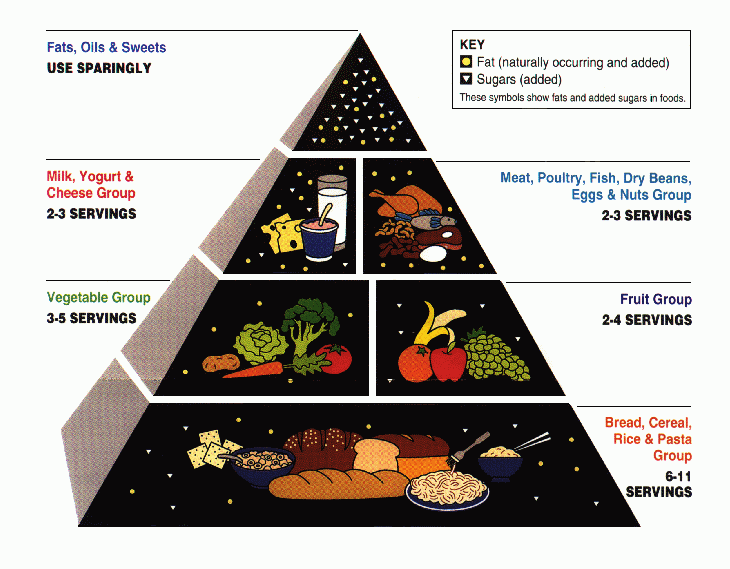
Ironically, government dietary guidelines encourage people - in the name of health - to eat precisely the kinds of foods that increase heart disease.  Take a look at the old food pyramid we all grew up with.

2011 USDA My Plate (Wikipedia)
It recommends a maximum of 11 servings of bread, cereal, rice and/or pasta (carbohydrates), five servings of veggies (carbohydrates), four servings of fruits (carbohydrates), three servings of dairy products (carbohydrates and protein [they recommend low-or-non-fat dairy]), three servings of meat (protein and very little fat, [they recommend lean meats]).  They lump fats and oils with sweets and tell you to "use sparingly", so we can neglect that.

In 2011, the USDA updated their dietary recommendations with their "My Plate" graphic.  It seems to recommend a little more protein, but it's mostly the same old story - lots of carbohydrate, little protein and almost no fat.

Furthermore, a large portion of those carbohydrates are made up of breads and cereals, which are most likely baked with hydrogenated vegetable oils, which - unlike natural saturated fats - really do damage your heart.

AHA Seal of Approval (Heart.org)
I don't mean to imply that veggies and fruits are bad for you because they contain carbs - far from it.  In fact, replace the grains with meat, and the USDA's "My Plate" graphic gets a whole lot healthier.

The American Heart Association doesn't do much better in their recommendations.  For example, let's take a look at some of the foods that bear the AHA's seal of approval.
Let’s look at the (ahem) nutrition in some of these heart-protecting foods.  In a serving size that provides just 118 calories (boy, that’ll get you through the morning, won’t it?), Honey Nut Cheerios contain 23 grams of refined carbohydrates.  Almost 10 of those grams are pure sugar.   A cup of West Soy vanilla soy milk contains 21 grams of carbohydrates, including 10 grams of sugar.  The instant oatmeal contains 31 carbohydrates including 12 grams of sugar, and the V-8 fusion juice may as well be a Coca-Cola:  25 grams of sugar in one cup. 
So well-meaning people filling their grocery carts with products bearing the American Heart Association’s seal of approval could easily end up on a diet high in refined starches and sugars and think they’re doing their hearts a favor.
Actually, it's even worse than that, because the serving sizes are unrealistic.  One packet of instant oatmeal or one cup of Cheerios would barely fill up my four-year-old.

The AHA puts its seal of approval on foods that are essentially refined flour and sugar with some hydrogenated vegetable oil for "good" measure.  Many ordinary people trust governmental organizations like the USDA, an non-governmental organizations like the AHA, to help them make wise decisions about which foods to eat to maintain or improve their health.  Clearly, those organizations are not doing their job.  And the results show in the chart I linked at the top of this post.  That, ladies and gents, is failure on a massive scale.

Mmmmm... steak!
This also highlights the backwardness of anti-meat hysteria.  Most saturated fats we eat derive from animals, either in the form of fat marbled into meat, or milk fat in dairy products.  Anti-saturated-fat hysteria often leads to anti-meat hysteria, which then leads to vegetarianism, or even worse, veganism.  As I've pointed out before, vegetarian/vegan diets aren't all that healthy, because most people who remove meat from their diets replace it with grains, not vegetables.

So, here's the bottom line: don't fear fat - at least not the natural kinds.  Avoid the chemically processed kinds of fats, like vegetable oils, margarine, vegetable shortening, etc. (you know, all the stuff they used to say was better for us), and enjoy the natural kinds of fats, like olives, olive oils, avocados, marbled steaks and butter (you know, all the stuff they used to say would kill us).

For a much more comprehensive discussion on the subject of fats from a dude who's been preaching this stuff for years, see Mark Sisson's Definitive Guide to Fats.  I also recommend his Definitive Guide to Oils.


Thursday, February 27, 2014

Mark Rippetoe on the Virtues of the Squat

You've probably heard and read the myth that squats are bad for your knees.  I wrote on this subject before, but now Mark Rippetoe covers it at PJ Media.
Squats are regarded as the basic lower-body exercise by strength athletes because nothing else compares to its ability to strengthen the structure of the knee — the muscles, tendons, bones, and ligaments that form the knee anatomy. 
(image credit: Thomas Campitelli, The Aasgaard Company 2013)
 The muscles on the front of the thigh are the quadriceps. They attach below the knee to the “tibial tuberosity” — the bump at the top of the shin bone — just below the kneecap. When they pull this bone forward, the knee extends and the force at the tendon attachment is directed forward relative to the joint. In contrast, the hamstrings pull backwards on either side of the knee at their attachments, which balances the forward force from the quads. This happens in a correct squat when the hips move back and the torso leans forward. The balance of forces is optimum at a position just below parallel, and protects the joint so well that a correct squat can be safely performed even without an ACL. (I don’t have one.) 
Fortunately, I still have both ACLs, but I'm missing part a meniscus in my left knee, and squats like the one the lady in the photo is performing were a vital part of my recovery, and continue to be a vital part of my training.  I firmly believe they helped prevent further injury.

As always with Coach Rippetoe's articles, read the whole thing.