Showing posts with label Nutrition. Show all posts

Tuesday, October 21, 2014

Vegetarians & Vegans Have Lower Sperm Counts

I'm sure you're as shocked at this confirmation of stereotypes as I am.
Researchers at Loma Linda University Medical School, in southern California, embarked on a four-year project to find out how diets affect sperm.
...
Vegetarians and vegans had significantly lower sperm counts compared with meat eaters, 50 million sperm per ml compared with 70 million per ml. 
They also had lower average sperm motility – the number of sperm which are active. Only one third of sperm were active for vegetarians and vegans compared with nearly 60 per cent for meat eaters. 
Those are significant differences.  The average vegetarian in this study produced 16.7 million viable sperm per ml, compared to 42.0 million for the meat eaters.  That means the vegetarians produced about 60% less viable sperm per ml when compared to the meat eaters.

Even if a man isn't interested in procreating, sperm counts and sperm motility are indicators of a man's overall health, especially his testosterone levels.  Why might vegetarians and vegans produce less viable sperm than their meat eating peers?
One factor could be diets rich in soy, the researchers hypothesis [sic.]. Soy contains phyto-oestrogens which have similar properties to the female hormone oestrogen. 
“The theory that we have come up with is that vegetarians are replacing meat with soy, which contains phytooestrogens and could be affecting fertility,” added Dr Orzylowska. 
“For children who have grown up with those kind of diets, it may have impacted on sperm quality from puberty. 
That seems like a terrible thing to do to a growing boy.  The researchers propose another possible reason.
The researchers also think that vegetarians and vegans may be deficient in vitamin b12. 
The article also references another possible reason from a separate Harvard study.
“We found men who had the highest intakes of fruit and vegetables high in pesticide residues tended to have lower sperm quality, specifically lower total normal count and mobile count” said Dr Chavarro.
My unscientific observation indicates that vegetarians and vegans tend to buy into the "organic" food (as opposed to inorganic food?) hype.  That might actually reduce the amount of pesticide residue they ingest, which would make the pesticide hypothesis invalid.

Every time I read about one of these studies comparing vegetarians to the general population, I wonder how they would compare to the strength training, paleo or primal eating segment of the population.  My unscientific observation also indicates that vegetarians and vegans tend to live healthier lifestyles than the overweight, sedentary majority of the population.  It seems more useful to compare them to other health-conscious people, rather than to people who place little to no emphasis on health and fitness.  I suspect that the differences referenced in the article would be even greater if the study compared vegans and vegetarians to paleo or primal men.

Humans are omnivores.  We're designed to eat a wide variety of foods from both vegetable and animal sources.  One can certainly live on a diet that deprives the body of one or the other, but it's far from optimum.

Meanwhile, back on the subject of stereotypes...


Heh!

Tuesday, March 25, 2014

No Correlation Between Saturated Fat and Heart Disease

If you've been reading books and/or articles by Gary Taubes and watching documentaries like "Fat Head", you know an increasing number of scientists question the conventional wisdom that saturated fat is inherently harmful.  You also know that the conventional wisdom was completely different not so long ago, and that the current conventional wisdom hasn't done much good.

Recently, the NYT published an article on a meta analysis that demonstrates that there is no correlation between saturated fat and heart disease.
...a large and exhaustive new analysis by a team of international scientists found no evidence that eating saturated fat increased heart attacks and other cardiac events....
...the new research, published on Monday in the journal Annals of Internal Medicine, did not find that people who ate higher levels of saturated fat had more heart disease than those who ate less. Nor did it find less disease in those eating higher amounts of unsaturated fat, including monounsaturated fat like olive oil or polyunsaturated fat like corn oil. 
“My take on this would be that it’s not saturated fat that we should worry about” in our diets, said Dr. Rajiv Chowdhury, the lead author of the new study and a cardiovascular epidemiologist in the department of public health and primary care at Cambridge University. 
... 
Dr. Chowdhury and his colleagues sought to evaluate the best evidence to date, drawing on nearly 80 studies involving more than a half million people. They looked not only at what people reportedly ate, but at more objective measures such as the composition of fatty acids in their bloodstreams and in their fat tissue. The scientists also reviewed evidence from 27 randomized controlled trials – the gold standard in scientific research – that assessed whether taking polyunsaturated fat supplements like fish oil promoted heart health.
So, if saturated fat is not the problem, what is?
The most damaging item here is the bun.
The smaller, more artery-clogging particles are increased not by saturated fat, but by sugary foods and an excess of carbohydrates, Dr. Chowdhury said. “It’s the high carbohydrate or sugary diet that should be the focus of dietary guidelines,” he said. “If anything is driving your low-density lipoproteins in a more adverse way, it’s carbohydrates.”
Boy, that sounds a lot like what people who the dietary establishment maligned - like Dr. Atkins, Gary Taubes and Dr. Cordain - have been saying for years (not that they agree with each other on everything).  

What about other fats? 
The researchers did find a link between trans fats, the now widely maligned partially hydrogenated oils that had long been added to processed foods, and heart disease. But they found no evidence of dangers from saturated fat, or benefits from other kinds of fats.
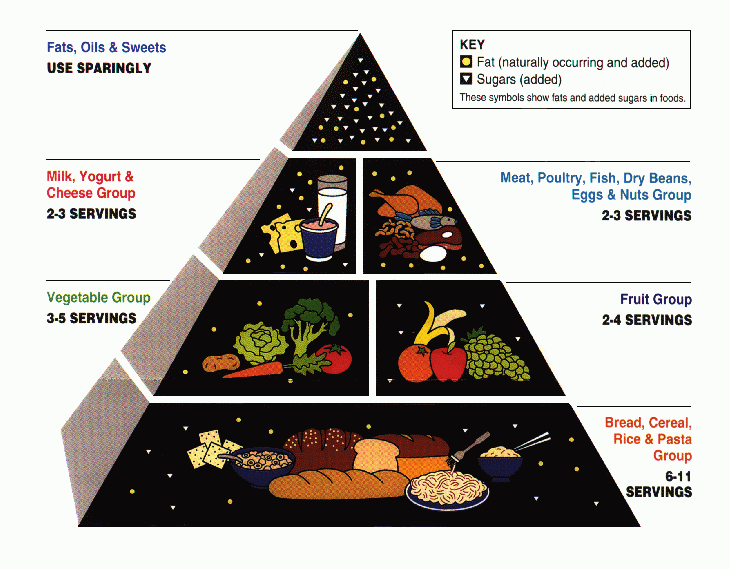
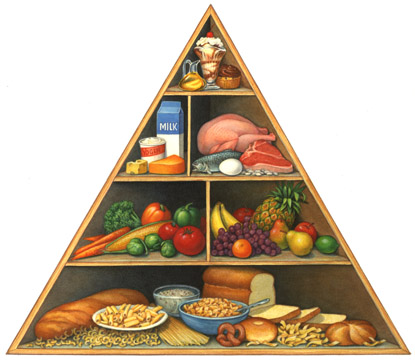
1992 USDA Food Pyramid (Wikipedia)
Ironically, government dietary guidelines encourage people - in the name of health - to eat precisely the kinds of foods that increase heart disease.  Take a look at the old food pyramid we all grew up with.

2011 USDA My Plate (Wikipedia)
It recommends a maximum of 11 servings of bread, cereal, rice and/or pasta (carbohydrates), five servings of veggies (carbohydrates), four servings of fruits (carbohydrates), three servings of dairy products (carbohydrates and protein [they recommend low-or-non-fat dairy]), three servings of meat (protein and very little fat, [they recommend lean meats]).  They lump fats and oils with sweets and tell you to "use sparingly", so we can neglect that.

In 2011, the USDA updated their dietary recommendations with their "My Plate" graphic.  It seems to recommend a little more protein, but it's mostly the same old story - lots of carbohydrate, little protein and almost no fat.

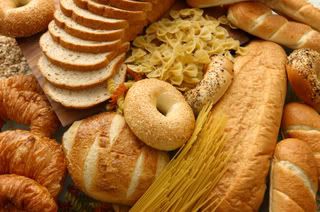
Furthermore, a large portion of those carbohydrates are made up of breads and cereals, which are most likely baked with hydrogenated vegetable oils, which - unlike natural saturated fats - really do damage your heart.

AHA Seal of Approval (Heart.org)
I don't mean to imply that veggies and fruits are bad for you because they contain carbs - far from it.  In fact, replace the grains with meat, and the USDA's "My Plate" graphic gets a whole lot healthier.

The American Heart Association doesn't do much better in their recommendations.  For example, let's take a look at some of the foods that bear the AHA's seal of approval.
Let’s look at the (ahem) nutrition in some of these heart-protecting foods.  In a serving size that provides just 118 calories (boy, that’ll get you through the morning, won’t it?), Honey Nut Cheerios contain 23 grams of refined carbohydrates.  Almost 10 of those grams are pure sugar.   A cup of West Soy vanilla soy milk contains 21 grams of carbohydrates, including 10 grams of sugar.  The instant oatmeal contains 31 carbohydrates including 12 grams of sugar, and the V-8 fusion juice may as well be a Coca-Cola:  25 grams of sugar in one cup. 
So well-meaning people filling their grocery carts with products bearing the American Heart Association’s seal of approval could easily end up on a diet high in refined starches and sugars and think they’re doing their hearts a favor.
Actually, it's even worse than that, because the serving sizes are unrealistic.  One packet of instant oatmeal or one cup of Cheerios would barely fill up my four-year-old.

The AHA puts its seal of approval on foods that are essentially refined flour and sugar with some hydrogenated vegetable oil for "good" measure.  Many ordinary people trust governmental organizations like the USDA, an non-governmental organizations like the AHA, to help them make wise decisions about which foods to eat to maintain or improve their health.  Clearly, those organizations are not doing their job.  And the results show in the chart I linked at the top of this post.  That, ladies and gents, is failure on a massive scale.

Mmmmm... steak!
This also highlights the backwardness of anti-meat hysteria.  Most saturated fats we eat derive from animals, either in the form of fat marbled into meat, or milk fat in dairy products.  Anti-saturated-fat hysteria often leads to anti-meat hysteria, which then leads to vegetarianism, or even worse, veganism.  As I've pointed out before, vegetarian/vegan diets aren't all that healthy, because most people who remove meat from their diets replace it with grains, not vegetables.

So, here's the bottom line: don't fear fat - at least not the natural kinds.  Avoid the chemically processed kinds of fats, like vegetable oils, margarine, vegetable shortening, etc. (you know, all the stuff they used to say was better for us), and enjoy the natural kinds of fats, like olives, olive oils, avocados, marbled steaks and butter (you know, all the stuff they used to say would kill us).

For a much more comprehensive discussion on the subject of fats from a dude who's been preaching this stuff for years, see Mark Sisson's Definitive Guide to Fats.  I also recommend his Definitive Guide to Oils.

Sunday, February 9, 2014

Obesity Is a Choice, Not a Disease

In another case of science confirming the obvious, a study conducted by the University of Minnesota concludes that telling people that obesity is a disease implies that they have no control over their weight (more importantly, their health) and discourages them from finding solutions by absolving them of responsibility. 
University of Minnesota researchers asked more than 700 adults to read one of three articles about obesity. 
One was a real article from the New York Times about the decision to classify obesity as a disease.
A second article focused on standard tips for managing weight, including having a weekly weigh-in and varying exercise to keep it interesting. 
The third piece argued that obesity is not a disease and emphasised [sic.] the importance of a person’s lifestyle to their health. 
... 
The obese men and men who read that obesity was a disease saw dieting for health as less important than the others.
They were also less concerned about their weigh, happier with their size and chose higher calorie sandwiches.
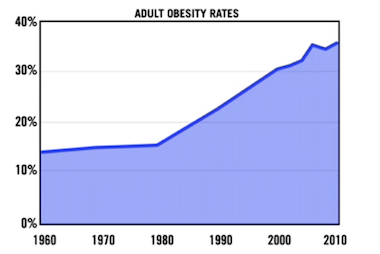
As with most things in life, the most important factor determining health and fitness is personal responsibility, especially in a country as wealthy and technologically advanced as the US.  Yes, genetics play a role, but as this chart from USA Today demonstrates, the obesity rate in the US rocketed from 13% in 1962 to 36% in 2010.  Even if the data is only 80% accurate, that's still an enormous increase in only 50 years.  A population's genetics simply cannot change that drastically in one generation.  Genetics are not the issue.

Another factor that comes up when discussing obesity in the US is poverty, because in the US the poor are fatter than the rich.
Wages were inversely related to BMI and obesity in a nationally representative sample of more than 6,000 adults – meaning, those with low wages had increased BMI as well as increased chance of being obese (Kim & Leigh, 2010).
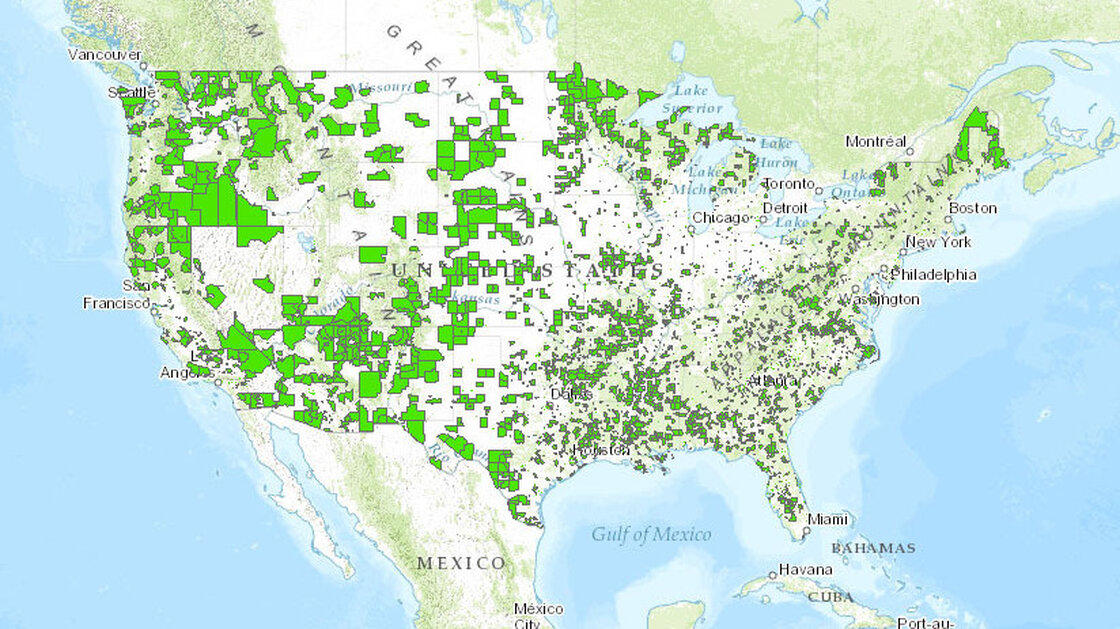
Supposedly, this phenomenon is the result of "food deserts".
Many Americans reside in food deserts—communities where retailers offering fresh food are scarce but fast-food restaurants and convenience stores selling prepared foods can abound. 
... 
Gallagher says. “You can’t choose healthy food if you don’t have access to it.”
According to this theory, poor people tend to be fatter because they can't afford to eat healthy foods. 
NPR.org: Food deserts mapped from coast to coast


I've always thought this theory was a load of steer manure based on personal experience.  First, my family and I are immigrants.  We moved to the US in 1983 and lived in poverty for years, and eating fast food was an extremely rare treat for us precisely because eating at home was far more affordable.  Second, although Aimee and I are solidly middle class, we still eat out rarely because we have eight kids and cooking a healthy meal at home is far less expensive than eating at a fast food restaurant or eating "prepared foods".

Personal experience is anecdotal, but now we have empirical evidence that my hunch was right.   
three years and $500 million into the federal Healthy Food Financing Initiative, there's a problem: A study suggests it's not working. 
... 
When a grocery store was opened in one Philadelphia food desert, 26.7 percent of residents made it their main grocery store and 51.4 percent indicated using it for any food shopping, the report found. But among the population that used the new supermarket, the researchers saw no significant improvement in BMI, fruit and vegetable intake, or perceptions of food accessibility, although there was a significant improvement in perception of accessibility to fruits and vegetables...
As James Taranto puts it...
The results "mirror findings in the U.K., where researchers created a similar comparison of two neighborhoods in Scotland and observed no net effect on fruit and vegetable intake," 
...
It's not that most "food desert" denizens eat unhealthy food because grocers refuse to supply them with fruits and vegetables. Instead, grocers don't supply them with fruits and vegetables because the demand is insufficient. 
You mean poor people are endowed with free will and are therefore responsible for their own actions, just like everyone else?  Isn't that amazing?

So then, why do so many people refuse to admit that obesity is a matter of individual responsibility?  It seems to me that those claiming that the obese are helpless in their plight hail from the political left.  Leftists, as a general rule, don't believe in individual responsibility, and believe deeply in paternalistic, sugar daddy government.

If obesity is not a matter of individual responsibility, if instead it's the fault of those mean old Capitalists, that gives them an excuse (as if they ever need one) to demand more government intrusion in free markets - which is just another way of saying individuals' free will choices.

Before anyone claims that stating that obesity is a matter of individual responsibility is a form of "fat shaming", let's think about some questions.

What is more shameful; being helpless, or being in control of ones self?  What is more empowering; being at the mercy of outside forces, or having the power to control ones own actions?

The choice seems obvious to me.

Sunday, September 15, 2013

Keeping Women Weak

Recently, two articles stood out to me because of their diametrically opposed views on the same subject.  I'll start with the one with which I disagree. 
Getting Models Into Fighting Shape
For models, the former boxer Michael Olajide Jr. is the heavyweight of trainers — the go-to guy for girls who have to get runway-ready in a hurry.  For this fashion week, he trained some 15 models needing to “sleekify,” as he called it, to squeeze into sample sizes. (Most common problem: the hips.)
Oh, hell.  Here we go.


Mr. Olajide, 49, a highly ranked middleweight boxer until an injury left him legally blind in the right eye and ended his career, has been attracting the fashion crowd since his days teaching at Equinox and Chelsea Piers in the 1990s. 
Equinox?  That explains a lot.
Eventually, the 6-foot, 165-pound Mr. Olajide ended up training the supermodels Iman and Linda Evangelista.
Wait... "6-foot, 165-pound"?  Seriously?


What about the clients?
Mr. Olajide acknowledged that the weight can come back on quickly once the workout (and preshow diets) stop. 
“Like boxers, they have a performance weight and an everyday weight,” he said of models. With each season, it can get harder to snap back to sample size. “It becomes: Will they allow themselves mentally to go to that level of discomfort? How hungry are they?” 
Good question.  Just how hungry are they?
The British model Nyasha Matonhodze, 18, started working out at Mr. Olajide’s gym at her agency’s recommendation. “As models, we know that we have to be, some would say, ridiculously thin,” she said. “It’s not exactly a woman’s shape, but it is high fashion.” 
So, they realize they're so skinny that they no longer have "a woman's shape", but they keep doing it anyway.  Does this sound remotely healthy to anyone?  And why are women using women who no longer look like women to sell women's clothes to women?

Exercises that trim mere mortals can be career-maiming for catwalkers. Push-ups are out — developing the chest is bad news
God forbid a woman be strong enough to lift herself off the floor!
— as are squats and lunges, which make the derrière too round to fit into the clothes. (Lingerie models are allowed lunges because they are allowed curves, he said.)
Right; because a flat butt and a rectangular figure are ideal for a woman.
Ab exercises also are rationed. “When they really burn the fat you’ll see a six-pack, which is not usually the goal,” Mr. Olajide said. “You want flat, but if you’re too cut, defined and hard, that can be counterproductive. We want long, willowy, wispy, flowing.”
In other words, weak.
Caitlin Holleran, 16, who in October wore a fitted floor-length chiffon dress on the Yves Saint Laurent runway in Paris, had to shrink her hips back down by two inches this season to match the measurement (34 inches) listed on her modeling card. Among other things, the type of power vinyasa yoga she’d been doing was building too much muscle, she said, adding bulk. 
Are you freaking kidding me?  36-inch hips are too big?  Yoga "was building too much muscle" and "adding bulk"?  And this girl is only 16!

Contrast that with the following irreverently, hilariously titled article.

Women’s Only: “OMG You Have an Amazing Ass”

I recently had a 15-year-old girl come to me for personal training to get her back in
shape before cheerleading started up again in the fall. Having done cheerleading and knowing just how many issues teenage girls can have with their bodies, weight and over-exercising, I’ll admit I was a little worried about what I might be dealing with. 

That girl, however, completely blew me away before our first session was even over. Right off the bat she came across happy, confident and comfortable in her body, and it was clear as soon as I’d put her through some basic exercises that she was pretty capable. In the middle of the session, while I was showing her some technique for her pushups, she just looked at me and said: 

"OMG you have an amazing ass — you look so strong!"
What?  A girl doing push-ups?  Oh, the horror!
This definitely made me laugh, but the message/mentality behind what she said made my entire weekend. For those of you who don’t know me, yes I do have a big butt, and while my legs are by no means huge by CrossFit standards, they’re definitely not small either.
If Yoga builds too much muscle and adds bulk, then "manly" movements, such as push-ups, rope climbs and squats, will obviously turn a girl into the she-hulk - right?


Uh... no, actually.  Not really.  Back to the story. 
For me it took finding CrossFit to finally let go of the “Skinny is Sexy” mentality, and I’m glad that I did; but I’m even more glad that a young girl who has never done CrossFit (or even heard of it) already considers strength way more important and attractive than being a size zero.
Awesome!
I went through high school convinced I needed to be skinny, and it wasn’t until my 20s — when I was introduced to CrossFit and weightlifting — that I realized the fact that my natural body type will always be strong (not petite) and began to accept that. Suddenly I was in a world where where the focus was NOT on
“burning calories,”
“losing weight,” or
“being a size zero.”
Instead I discovered that
performance trumped appearance;training was something you did to get stronger/faster/better; and
you ate to fuel your body 
Doesn't training "to get stronger/faster/better" and eating "to fuel your body" sound healthier than a woman starving herself until she - by her own admission - no longer resembles a woman?

Here's the question I really need to ask all you ladies out there, though, because I can't answer it myself.  Why do women insist on torturing themselves like this?  I don't mean the models.  They've clearly made a cost/benefit analysis.  They believe the money, fame and adulation they (will potentially) receive are worth the sacrifices they make.

Julie Foucher demonstrates the overhead squat.
What I mean is; why do ordinary women insist on torturing themselves by giving the fashion industry the financial incentive to use women who've starved themselves into no longer looking like women to sell them clothes?  Why do ordinary women want to look like them?  As the NYT article makes clear, not even the models themselves can look that way for long.

And don't even try to blame it on us men, ladies!  Heterosexual men do not dominate the fashion
industry.  Women and homosexual men dominate the industry.

Face it, ladies, you are doing this to yourselves - and each other. 

My question is; why?  What's the point?  What do you get out of it - other than eating disorders, a perpetual sense of failure and abject misery?

I don't get it ladies.  I just don't.  Maybe one of you can enlighten me.

Monday, February 25, 2013

Vegan Goes Carnivore, Gets Healthy

Vegetarian diets aren't as healthy as most people assume.  John Nicholson shared his story of transformation with The Independent.
Two years later, we decided to stop eating meat because we used to see all the cattle taken away to the slaughterhouse and we were growing a lot of our own food anyway. That's where the adventure into vegetarianism, wholefoods and healthy eating started. 
People didn't really get us and I was considered a bit of a freak for my diet. But then in the mid-Eighties, copying American guidelines, the British government's healthy-eating advice changed and it started encouraging people to base their diets on carbohydrates rather than protein and fat. By the early Nineties, the whole "five-a-day" thing came into play and diets that included a lot less animal and saturated fat and even vegetarianism became the default healthy-eating advice.
From the National Health and Nutrition Examination Survey
There are a few points to make here.  First, note that government dietary recommendations changed (first in the US) in the late '70s and early '80s.  It just so happens that's when obesity rates began to skyrocket in the US.  Besides the chart to the right, you can also view a time progression that illustrates it even more vividly.  Is it a coincidence?  Possibly, but I don't think so.

Second, when one removes meat from ones diet, one has to make up the volume somehow.  Few "vegetarians" and "vegans" make up that volume with vegetables.  They make it up with grains.  Consequently, most "vegetarians" are actually "grainitarians".  The problem with basing ones diet on grains is that humans aren't designed to do so.  Our digestive systems can't extract a grain's full nutritional value, and grains aren't all that nutrient-dense in the first place, when compared to meat and veggies.  Plus, grains cause insulin spikes that lead to fat storage, and inflammation that leads to joint pain, digestive tract issues and even heart disease.  For a full list of issues with eating grains, follow this link.

Back to Mr Nicholson...
We were very smug about our lifestyle, which we thought was both healthy and morally correct.
Is anyone more sanctimonious than vegans?

But after about six or seven years of being vegetarian, we both started to get slowly and progressively more ill.  The first thing was I started to develop what was later defined as irritable bowel syndrome, or IBS.
Right on cue...
By 1998, it was absolutely chronic. I went to doctors but nobody had a clue what to do about it.... I became clinically obese. I’m 5ft 10in and at one point I was 15 stone [210 lb ~ OS]: quite an achievement on a wholefood, low-fat, (and by this point) vegan diet. On top of that I had one of the highest cholesterol levels that the doctor who took it had seen – 9.2 – and in 2001 they put me on statins.
Yep.  Multiple symptoms of excessive carbohydrate consumption, particularly grains.  Some people are more sensitive to it than others, of course, and Mr Nicholson is probably one of them.

I would take food diaries to the doctor, who would tell me everything was fantastic, and congratulate me on not eating butter, cream and cholesterol. When I asked doctors whether I should change my diet, they told me no.
Even doctors are subject to human failings, like following conventional wisdom despite all evidence to the contrary.

I felt upset to leave veganism behind and took some convincing. In the end, I thought I might as well give it a go. The first thing I ate as part of my new diet was ox liver, so I really threw myself in at the deep end.
Organ meats are some of the most nutritious stuff one can eat.

The second thing I ate that day was a rare steak. That was when I had a transformative experience.... After 24 hours, I never had another IBS episode again. It went overnight. 
I stopped filling my entire meals with carbohydrates – wheat, rice and potatoes – and introduced all meats, butter, cream, lard and goose fat.   
I dropped three and a half stone [49 lb ~ OS] within the first six months. And it wasn’t just weight; what was really freaky about it was that I dropped loads of body fat, going from 28 per cent to 13-14 per cent. In fact, the entire composition of my body changed so I went from being apple-shaped to triangular. And this wasn’t doing a new fitness regime, it was just a change in diet. Even my cholesterol has gone down (on a high-fat animal diet full of cholesterol!) and is now 5.1. I stopped taking statins three years ago.  
My new diet went against all the health advice at the time, which was pretty much eat less meat, fewer animal products, and eat more fruit, vegetables and wholegrain carbohydrates, but I’d never felt better.
Granted, not everyone's experience is as dramatic as Mr Nicholson's.  He's probably more sensitive to the effects of grains than most people, but everyone can benefit from a diet of meat, veggies, fruit, nuts and seeds, little starch and no sugar.

Eat Paleo for Your Teeth

Nice chops, Grok.  Who's your orthodontist?
We know that eating a diet rich in meats, vegetables, fruits and nuts is good for your heart and athletic performance, but now it turns out it's good for your teeth as well.
Prehistoric humans didn't have toothbrushes. They didn't have floss or toothpaste, and they certainly didn't have Listerine. Yet somehow, their mouths were a lot healthier than ours are today. 
"Hunter-gatherers had really good teeth," says Alan Cooper, director of the Australian Centre for Ancient DNA. "[But] as soon as you get to farming populations, you see this massive change. Huge amounts of gum disease. And cavities start cropping up." 


In most "farming populations", most people eat a largely "vegetarian" (which is really "grainitarian") diet, as opposed to the meat-centric diet hunter-gatherers eat, because peasant farmers can't afford to eat meat, except for rare, special occasions.  The peasant farmers' grain-centric diet is high in simple carbohydrates, and low in protein and fat, as opposed to the high protein, high fat, low carbohydrate diets of hunter-gatherers.  What do all those simple carbs do to the teeth?
Cooper and his research team looked at calcified plaque on ancient teeth from 34 prehistoric human skeletons. What they found was that as our diets changed over time — shifting from meat, vegetables and nuts to carbohydrates and sugar — so too did the composition of bacteria in our mouths.

Not all oral bacteria are bad. In fact, many of these microbes help us by protecting against more dangerous pathogens.

However, the researchers found that as prehistoric humans transitioned from hunting and gathering to farming, certain types of disease-causing bacteria that were particularly efficient at using carbohydrates started to win out over other types of "friendly" bacteria in human mouths. The addition of processed flour and sugar during the Industrial Revolution only made matters worse.
As we already know, the problems caused by high carbohydrate, grain-centric diets aren't limited to the teeth.
"You're walking around with a permanent immune response, which is not a good thing," says Cooper. "It causes problems all over the place."

In addition to oral disease, those problems may include diabetes, obesity and even heart disease. 
This is yet another example of how "vegetarian" diets aren't nearly as healthy as they're cracked up to be. 

Thursday, April 26, 2012

Homemade Almond Butter

Taking a break from infuriating subjects like politicians who refuse to do their jobs and teachers who suck at theirs, here's a far more cheerful post on homemade almond butter.  I followed these instructions.  I didn't take photos of the process, so I'll use the ones from the website where I found the instructions.

I roasted a bag (almost 16 oz) of raw almonds in the oven at 350 F for 15 minutes.  I stirred them once around 8 minutes in.  I don't know if it's necessary, but I placed the almonds on wax paper, just like the instructions said.  Roasting is non-essential, but it makes the almonds tastier.

I poured the toasted almonds in our Cuisinart food processor and cranked it up.  I did this in the garage, by the way, because our toddler was taking a nap.

At first, the food processor ground the almonds into a powder.  I poured in a little honey for sweetness.  Periodically, I had to push the powder down from the mixing bowl's walls with a spatula.  Eventually the grinding extracted the almond oil and turned the mixture sticky, then creamy.  I suppose you could make it as chunky or creamy as you want.  The entire process took about 30 minutes.

My almond butter!
Aimee and I had apple slices dipped in almond butter tonight and they were scrumptious!

Why go through all that trouble, as opposed to just buying some Jiffy?

First, peanuts are legumes, not nuts, and like all legumes they contain anti-nutrients that prevent people (though not animals actually designed to eat them) from absorbing the nutrients in them.  Second, most store bought peanut butters contain all kinds of vegetable oils, which aren't healthy either.

Almonds don't have those problems, and they contain lots of mono-unsaturated fats.  Unfortunately, they also contain lots of Omega-6 fatty acids, but hey, nobody's perfect (Omega-6s are necessary, but I get plenty from all the eggs I eat, and Omega-3s are more difficult to get).  Besides, it's a snack, not a meal.  Next, I think I'll try cashews, which are much lower in Omega-6s and much higher in Omega-3s.

Also, it tastes way better than peanut butter.  I don't think it even needed honey.

Finally, I read a Popular Mechanics article years ago (which I unfortunately can't find now) in which the author advised avoiding tools that only do one job.  Aimee and I planned on buying a nut grinder until I found a discussion board where most of the members said a food processor works just fine.  I'm glad I didn't waste our money.  I'm sure nut grinders are great, but they only do one job - grind nuts.  Food processors have about a million different uses.

Thursday, April 19, 2012

Food Deserts?

It has become an article of faith among some policy makers and advocates, including Michelle Obama, that poor urban neighborhoods are food deserts, bereft of fresh fruits and vegetables. 
But two new studies have found something unexpected. Such neighborhoods not only have more fast food restaurants and convenience stores than more affluent ones, but more grocery stores, supermarkets and full-service restaurants, too. And there is no relationship between the type of food being sold in a neighborhood and obesity among its children and adolescents. 
Within a couple of miles of almost any urban neighborhood, “you can get basically any type of food,” said Roland Sturm of the RAND Corporation, lead author of one of the studies. “Maybe we should call it a food swamp rather than a desert,” he said. 
Some experts say these new findings raise questions about the effectiveness of efforts to combat the obesity epidemic simply by improving access to healthy foods. Despite campaigns to get Americans to exercise more and eat healthier foods, obesity rates have not budged over the past decade, according to recently released federal data. 
“It is always easy to advocate for more grocery stores,” said Kelly D. Brownell, director of Yale University’s Rudd Center for Food Policy and Obesity, who was not involved in the studies. “But if you are looking for what you hope will change obesity, healthy food access is probably just wishful thinking.”
You mean healthy eating habits are largely a matter of individual responsibility?  Who could've possibly anticipated that

Wednesday, March 7, 2012

Why We Home School

People often ask us why we home school our kids.  "Aren't you afraid they won't get socialized properly?" they ask.  Curiously, Aimee and I have never felt so incapable of properly socializing our children that we needed government to do it for us.  In fact, I find it odd that so many parents do not consider themselves capable of properly socializing their children without government assistance. 

Besides the academic superiority of the curriculum we use (Bob Jones University), we also avoid exposing our kids to the immoral philosophies and plain stupidity that permeate government schools nowadays.  So, I thought I'd highlight some of that immorality and stupidity whenever examples pop up in the news.

You may have heard of the recent case in which a school took away a child's lunch and replaced it with a school lunch.
A Hoke County preschooler was fed chicken nuggets for lunch because a state worker felt that her homemade lunch did not have enough nutritional value, according to a report by the Carolina Journal. 
The West Hoke Elementary School student was in her More at Four classroom when a state agent who was inspecting lunch boxes decided that her packed lunch — which consisted of a turkey and cheese sandwich, a banana, apple juice and potato chips — “did not meet U.S. Department of Agriculture guidelines,” the Journal reports.
The student’s mother told the Journal she received a note from the school about the incident and was charged $1.25 for the cafeteria tray, from which her daughter only ate three chicken nuggets.
The note explained how students who did not bring “healthy lunches” would be offered the missing portions and that parents could be charged for the cost of the cafeteria food, the Journal reports.


Let's look at a few of the problems with this incident.
  1. Government has no right to tell parents what they can and cannot give their kids to eat, no matter how good their intentions.
  2. Since when are USDA guidelines a good example of healthy eating?
  3. How exactly are chicken nuggets healthier than a turkey sandwich?
  4. Note how, after violating the mom's parental rights, the school forced her to pay for the privilege. 
That's the kind of stupidity, blended with a touch of bureaucratic nanny state despotism, that only government can conjure.

But it gets worse.  Check out the crap government schools feed kids.

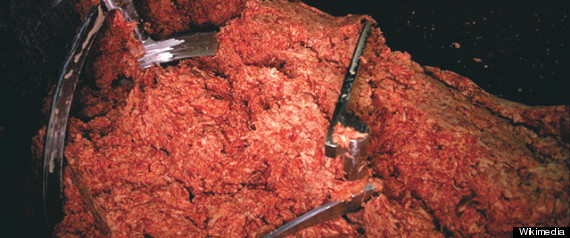
Pink slime -- that ammonia-treated meat in a bright Pepto-bismol shade -- may have been rejected by fast food joints like McDonald's, Taco Bell and Burger King, but is being brought in by the tons for the nation's school lunch program. 
The U.S. Department of Agriculture is purchasing 7 million pounds of the "slime" for school lunches, The Daily reports. Officially termed "Lean Beef Trimmings," the product is a ground-up combination of beef scraps, cow connective tissues and other beef trimmings that are treated with ammonium hydroxide to kill pathogens like salmonella and E. coli. It's then blended into traditional meat products like ground beef and hamburger patties. 
"We originally called it soylent pink," microbiologist Carl Custer, who worked at the Food Safety Inspection Service for 35 years, told The Daily. "We looked at the product and we objected to it because it used connective tissues instead of muscle. It was simply not nutritionally equivalent [to ground beef]. My main objection was that it was not meat."
 So, the USDA, the supposed ultimate arbiters of what foods are and are not healthy, the same people whose standards the kid's home-made lunch didn't meet, are buying tons of this garbage to feed kids in government schools.

Like I said; stupidity.

Sunday, February 5, 2012

Chicken Kabobs


Aimee and I made these totally awesome chicken-and-veggie kabobs Friday night.  Well, she made the marinade (using this recipe) and cut, prepped and skewered the chicken and veggies.  I grilled them.  Which means she did all the hard work.


It's no surprise to me that Aimee's an amazing cook, but I was still surprised at how flavorful they were.  We unintentionally marinated the meat and veggies for two days in the fridge.  We meant to marinade them for one day only, but we had more left-overs than expected from another meal.  Once on the grill they took about eight minutes to cook, and they burst with flavor when I bit into them.  Most importantly, they contain all the nutrition necessary for one meal in one tasty, convenient package.

UPDATE: Aimee informs me that she added a lot more lemon juice than the recipe prescribed.

Sunday, January 29, 2012

Fritata

I usually make a breakfast at night to take to work the next morning, which I then microwave after PT.  It's not as good a freshly made hot breakfast, but it's still better than eating at the chow hall.  It's healthier, too.  Even if I buy an omelet - which is about the healthiest breakfast I can get there - it's still fried in vegetable oil.

My typical breakfast, ever since watching how to make one on Food Network, is a 4-egg fritata with veggies and bacon.  Fritatas are great because you can use pretty much anything you have in the fridge.  This one has red and green bell peppers, red and green onions, two slices of bacon, black pepper, chili powder and a tiny bit of milk.

The first few I made I burned on the bottom.  Then I figured out it's best to not really cook the eggs on the stove.  Now I cook the bacon and veggies on the stove, pour the eggs in and immediately put the whole skillet in the oven and broil it for a a minute or two.  That's why I prefer to use the stainless steel skillet as opposed to a non-stick one.  But hey, that's what bacon is for; right?

Between prepping the veggies and the actual cooking portion the whole process only takes about ten minutes.

Steak & Eggs

This is my idea of a good breakfast; a grilled rib eye steak, two fried eggs smothered in sauteed tomatoes and red onions, a kiwi fruit and a home made Americano with creme.  Yum! 

Friday, January 27, 2012

Mmmm... Beeeeef!

Just in case you were wondering, this is what 380 lb of locally-grown beef looks like in the 21 cubic-foot freezer in our garage.


And this is what a delicious, paleo friendly meal looks like - salad, half an avocado and a tasty, grilled rib eye so juicy and tender you could cut it with a fork!  Mmmmmm....  The entire meal took all of 15 minutes to make (Aimee made the salad while I seasoned and grilled the steaks) and, yes, I did eat all the scrumptious, caramelized fat!

Wednesday, January 11, 2012

The Paleo Diet Flow Chart

From Crossfit Manhattan, KS: a handy guide for when you have a hard time deciding if something is healthy to eat or not.


Thursday, December 22, 2011

Gary Taubes: Why We Get Fat

Courtesy of Crossfit HQ,  a great three part lecture by Gary Taubes, investigative science journalist and author of Why We Get Fat: And What to Do About It.  He presents evidence that explodes many long-held beliefs about nutrition.


Monday, December 19, 2011

Mark's Definitive Guide to Fats

Yesterday we looked at how grains, which the USDA continues to tell us are healthy and necessary for our nutrition, aren't.  What is healthy?  How about fat?  If the USDA was (still is) completely wrong about grains, could they be equally mistaken about fats?  Mark Sisson explains.
As you know, I’ve always been a friend to many fats. But the fact remains, ladies and gentlemen, that not all fats are created equal.  A few fats, including but not limited to trans fats, deserve every bit of disparagement they get and then some. However, we feel for those other little guys in the group. Many of them are, assuredly, a good lot, and we’d like to put in a good word for them. 
 This one is complicated, and therefore difficult to summarize, but I'll try.

  1. Monounsaturated fats - Healthy sources: olive oil, avocados, nuts
  2. Polyunsaturated fats: There's no agreement as to the optimum ratio between the two major types, but a 1:1 ratio is probably best.  Most Americans eat far too much Omega 6 and too little Omega 3. 
    • Omega 3 - Healthy sources: fish, grass-fed ruminants (beef, bison, elk, goat, lamb, venison, etc.), nuts
    • Omega 6 - Healthy sources: poultry, nuts
  3. Saturated fats - Healthy sources: animals.  Tasty, tasty animals. 
There's much more to it, of course, so please read the whole article. 

Sunday, December 18, 2011

Mark's Definitive Guide to Grains

Remember the old USDA food pyramid with which we all grew up?

We were supposed to eat tons of grains (cereal, bread, pasta, etc.), lots of veggies and fruits, a little meat and dairy and a teensy, weensy little bit of fat and sweets.

It's a load of crap, except for the sweets.

Mark Sisson, of Mark's Daily Apple, explains why.
When I say humans didn’t evolve eating grains, I mean our digestive processes didn’t evolve to maximize the effectiveness of grain consumption. Just because you can tolerate grains to a certain degree, as just about all of us can (thanks to those earlier folks hitting the end of the genetic line), doesn’t mean your body was designed for them or that they’re truly healthy for you or – especially – that you can achieve optimum health through them. We’re not talking about what will allow you to hobble along. We’re talking about the foods that offer effective and efficient digestion and nutrient absorption in the body.
There's much more at the link above, but basically, it comes down to these factors:

  1. Grains' glycemic load is too high.  They cause spikes in blood sugar.  The body responds by producing insulin, which removes sugar from the blood and causes the body to store fat.
  2. Grains have very little nutritional value when compared to meat, vegetables, fruits and nuts.
  3. What little nutritional value grains have is negated by phytate, which prevents the body from absorbing those nutrients.
  4. We don't need them.  Whatever nutrition we might receive from grains, if not for the phytate, we can get from vegetables and fruits without the negative effects of grains, and far more benefits, like antioxidants and natural anti-inflammatories. 
Bottom line; avoid grains and replace them with meat, veggies and fruit.