Monday, December 29, 2014

The Best Defense Against a Violent, "Unarmed" Bad Guy...

Is a good guy with a gun.

“This large gentleman just pounding on this lady, closed fist you know multiple times and heavy heavy elbows to the face and neck” says Kreag. 
Kreag has a license to carry a concealed handgun and he served in the U.S. Army for eight years. He worked as a private security contractor in Iraq and he’s a firearms instructor. 
“I was yelling commands at him to stop assaulting her, stop assaulting her.”
"He stopped attacking her and she was screaming, yelling for help and very much hysterical” says Kreag.
The man got out of the car but he was still very angry. 
“Then he turned his attention to the fire arm and was saying ‘don’t shoot me, don’t shoot me.’ I said I’m not going to shoot you, just stay still, don’t do anything crazy. The cops will be here any minute.”
The "large gentleman" (Mr Kreag is clearly being too kind) is MacMichael Nwaiwu.

By the way, is this an unfortunate coincidence?

I put "unarmed" in quotes in the title because the word seems to imply that the person is harmless, which is false.  According to the FBI's annual crime report, in 2012, murderers killed 678 Americans using only their hands and feet as weapons.  That same year, murderers killed 322 Americans using rifles - even those scary "assault rifles".  That's less than half.  Obviously, that doesn't mean that hands and feet are more dangerous than rifles, but it does mean that one should always assume that a violent person is capable of killing, even if that person possesses no weapon other than his/her own body.

It's fortunate that Mr Kreag had his gun at the time of the incident.  Without it, Mr Kreag may have chosen to not intervene.  We don't know how much damage Mr Nwaiwu inflicted on his victim, but it's clear that he would've inflicted much more damage had Mr Kreag not intervened.

If Mr Kreag had intervened without a gun, on the other hand, it seems clear that Mr Nwaiwu would have turned his wrath onto Mr Kreag.  We don't know what would've happened then, but real life isn't a Bruce Lee movie.  Good guys sometimes get curb-stomped.  A gun makes that far less likely.

That being said, good guys with their concealed weapons permits must always remember that a gun is no guarantee of safety either.  It's a tool, not a talisman.  And like every tool, it has limitations.

Friday, December 26, 2014

Strength Training Beats "Cardio" for Fat Loss

We know that strength predicts health and longevity much more accurately than BMI.  And we know that - within a surprisingly broad range - body fat doesn't make much of a difference to health.  Now we have further evidence that strength training is more effective than "cardio" at keeping body fat within healthy levels. 

2014 CrossFit Games Masters Competition: Deadlift Ladder Event
...weight training is the most effective way of keeping abdominal fat in check, compared to other activities such as running or cycling. 
Researchers at the Harvard School of Public Health measured the activity levels of over 10,000 men aged 40-plus, monitoring their weight and waist circumference over a 12-year period.
2014 CrossFit Games Masters Competition
I'm glad that the researchers chose to conduct their study on men 40 and older, although I wish they'd conducted the study on women, too.  Most researchers conduct fitness studies on healthy young men - typically in their 20s.  People in their 20s don't need as much help staying healthy as people in their 40s.  And the kind of physical activity that produces improvement in a young, healthy 20-year-old may not work for an older person, because the older person can't recover as quickly as a younger person.  As a general rule, older people simply can't handle the kind of training volume younger people can.
They found that those men who spent an extra 20 minutes a day weight training gained less abdominal weight over the course of the study than men who increased the amount of time they spent doing aerobic exercise.
2014 CrossFit Games Masters Competition

 Guess what's even better than strength training alone.
Combining weight training with aerobic exerise led to even better results, the study found. 
Frank Hu of Harvard School of Public Health said: "This study underscores the importance of weight training in reducing abdominal obesity, especially among the elderly. 
"To maintain a healthy weight and waistline, it is critical to incorporate weight training with aerobic exercise."
2014 CrossFit Games Masters Competition

It seems intuitively obvious, doesn't it?  Our bodies are designed to move themselves slowly over long distances, quickly over short distances, and to move heavy external loads over even shorter distances.  It simply makes sense to train the body the way it's designed to work, as opposed to limiting the body to only one time domain and/or modality.

Now, guess which training program covers all those time domains and modalities.  That's right.  CrossFit.

2014 CrossFit Games Masters Competition: Sprint Sled Event.

Unfortunately, although the article's title is "Why weight training is better for your waistline than running", it doesn't actually explain why.  The following video does.  I encourage you to watch the whole thing, but you can skip to the actual explanation at 7:28.


The short version is that when you do "cardio", you burn fat during your training session.  So, if you do "cardio" for an hour, you burn fat for an hour.  When you train for strength, and even more so when you perform high intensity training like CrossFit, you burn sugar during the training session, but you burn fat for hours following the training session as you recover.

The photos I linked above are from the Masters Competition of the 2014 CrossFit Games.  All the athletes that compete in the Masters Division are in their 40s, 50s and 60s.  The video below is a good summary of the competition, and the kind of training these athletes do.


Stay healthy, my friends.

Wednesday, November 26, 2014

Obamacare Architect Says "Liberals" are Stupid

You may have heard, or read, by now about the controversy surrounding Obamacare (and Romneycare) architect Jonathan Gruber.  If not, here's a pretty good summary in video form.


If you follow the video link to YouTube, you can watch much longer versions of his remarks in context, which makes them even worse.

Most of the controversy surrounds Gruber's insults directed at American voters.  He called American voters stupid and economically illiterate, and accuses Americans of not caring about the uninsured.  His solution, then (in his own words) was to "[exploit] the lack of economic understanding of the American voter", and to use the "tortured way" in which the bill was written, and the bill's "lack of transparency" to trick American voters into accepting a law they would have otherwise rejected.

Gruber's statements shouldn't be controversial.  Gruber is right.  Sort of.  If you actually believed that "if you like your doctor, you can keep your doctor", and "if you like your plan, you can keep your plan", and that Obamacare would cover the supposed 40 million uninsured Americans, and that Obamacare would cover preexisting illnesses, all while "bend[ing] the cost curve down" and not "add[ing] a dime to the national deficit", then you sir/ma'am really are naive, gullible, economically illiterate - and yes - stupid.

In other words, Gruber is saying that "Liberals" are stupid, because "Liberals" swallowed every lie that Gruber - and more importantly, every Democrat politician - sold them, hook, line and sinker.

Ladies and gentlemen: Gruber is referring to you.

Conservatives and Libertarians have been warning the country about all of Gruber's and the Democrats' lies since 2009.  Conservatives and Libertarians aren't Gruber's "stupid", economically illiterate, stingy voters.  "Liberals" are.

Possibly the most important part of this whole controversy is that Gruber unintentionally gave the whole world a glimpse into how Leftists think.

Leftists believe ordinary people are too stupid to make decisions for themselves, and too stingy to care for the needy through voluntary charity.  Leftists therefore believe that ordinary people need Leftist elites - like Gruber and all the Democrats who forced this monstrosity on the rest of us - to make decisions for ordinary folk and force them to care for the needy at gun point, through taxation.

The fact that charity provides politicians with no opportunity for graft, and taxation offers myriads of opportunities for graft, never enters the Leftist elites' minds, of course.  It's all for the children, you see.

So, thank you, Jonathan Gruber, for being honest.  Even if you never meant to be. 

Saturday, October 25, 2014

The Best Defense Against Three Bad Guys With Guns...

Is a good guy with a gun.  Even if he's 67 years old.  
According to witnesses, a man, his wife, and his 19-year-old granddaughter were home on Yedda Road in Lumberton when a black male knocked on their door and asked for water for his mechanical problems with his car. 
Two other people entered the home wearing black clothing, ski masks and gloves asking for money. All three suspects also had handguns, according to the release. 
The release states that the man and his wife were forced into the back of the house and advised to open the safe while the suspects attempted to rape the 19-year-old granddaughter. 
The man was then able to retrieve a weapon and several shots were fired between the man and the suspects in the house. The man was struck multiple times by gunshots and the suspects then fled the scene in his vehicle. 
Brandon Stephens (L), Jamar Hawkins (C) and Jamie Lee Faison (R): Source

The man was transported to Southeastern Regional Medical Center and later airlifted to another medical facility where he remains in serious condition, according to the release.
Officers later received a call from the McLeod Hospital in Dillon and discovered that Stephens and Hawkins had been shot. Both were airlifted to another medical facility for emergency surgery. 
Jamie Lee Faison, 20, was later found in the man's stolen vehicle deceased, where he had been shot, according to the release. 
During their first court appearances Friday, Stephens and Hawkins were each charged with first-degree burglary, assault with a deadly weapon with intent to kill, possession of a firearm by a felon, first-degree sexual offense, kidnapping, and two counts each of robbery with a firearm and felony conspiracy. Bond for each suspect was set at $1 million secured. 
Stephens, Hawkins, and Faison are possible persons of interest in other home invasions, according to the release.
Another story from the Robesonian states that the grandfather is 67-year-old Kenneth Byrd.  Mr Byrd is still in serious condition after surgery, but is expected to recover.  "Recover", in this case, is a relative term.  I know several men who were shot in combat.  None of them ever fully recovered their health, and they were all young men when they were shot.

Mr Byrd is a hero.  He successfully defended his wife and granddaughter at the cost of his health, if not his life.  And, as the Robesonian points out, he was able to do so because he was armed.
We would never advise folks on how to protect themselves, but we think it’s fair to say that Kenneth Byrd and his loved ones are alive today because he had a weapon in the home and knew how to use it.
Thieves typically break into empty houses because doing so minimizes their probability of getting caught.  A criminal who invades a house he knows is occupied probably wants more than money.  A group of criminals who force their way into a house they know is occupied, beat up an elderly woman and attempt to rape a teenage girl probably want to eliminate witnesses, and that means murder.

Mr Byrd was able to prevent that because he was armed.  Suppose that, by some miracle, the confiscation crowd could make every gun on earth disappear and prevent anyone from making any more guns.  Imagine if the three criminals that invaded Mr Byrd's house had done so wielding knives and/or clubs, and Mr Byrd had no gun with which to defend his family.  How would a 67-year-old man defend his family against three much younger, stronger attackers?

He couldn't.  It's that simple.  Guns make it possible for the older, weaker and less numerous to defend themselves from the younger, stronger and more numerous, even when the attackers themselves have guns.

The Best Defense Against a Bad Guy With a Gun...

Is a good guy with a gun.  Even in Canada
By all accounts, the white-haired grandfather, a decorated veteran of the Royal Canadian Mounted Police, kept cool amid the chaos as dozens of bullets flew in the corridors, went to his office, retrieved his weapon and with a firm hand and a steely eye shot a killer before he could kill again. Vickers, who is 6 feet 4 inches tall, then walked away, gun-in hand, having “taken care of business,” as one news outlet put it. 
And then he called his mother to say he was safe.
The National has a pretty good breakdown of the shootout.


This is the man himself.


Doesn't quite look like the stereotypical Hollywood hero, does he?  That's okay.  Most heroes don't.  Anyway, this is my favorite online tribute to Mr Vickers.


Hell yeah!

Tuesday, October 21, 2014

Vegetarians & Vegans Have Lower Sperm Counts

I'm sure you're as shocked at this confirmation of stereotypes as I am.
Researchers at Loma Linda University Medical School, in southern California, embarked on a four-year project to find out how diets affect sperm.
...
Vegetarians and vegans had significantly lower sperm counts compared with meat eaters, 50 million sperm per ml compared with 70 million per ml. 
They also had lower average sperm motility – the number of sperm which are active. Only one third of sperm were active for vegetarians and vegans compared with nearly 60 per cent for meat eaters. 
Those are significant differences.  The average vegetarian in this study produced 16.7 million viable sperm per ml, compared to 42.0 million for the meat eaters.  That means the vegetarians produced about 60% less viable sperm per ml when compared to the meat eaters.

Even if a man isn't interested in procreating, sperm counts and sperm motility are indicators of a man's overall health, especially his testosterone levels.  Why might vegetarians and vegans produce less viable sperm than their meat eating peers?
One factor could be diets rich in soy, the researchers hypothesis [sic.]. Soy contains phyto-oestrogens which have similar properties to the female hormone oestrogen. 
“The theory that we have come up with is that vegetarians are replacing meat with soy, which contains phytooestrogens and could be affecting fertility,” added Dr Orzylowska. 
“For children who have grown up with those kind of diets, it may have impacted on sperm quality from puberty. 
That seems like a terrible thing to do to a growing boy.  The researchers propose another possible reason.
The researchers also think that vegetarians and vegans may be deficient in vitamin b12. 
The article also references another possible reason from a separate Harvard study.
“We found men who had the highest intakes of fruit and vegetables high in pesticide residues tended to have lower sperm quality, specifically lower total normal count and mobile count” said Dr Chavarro.
My unscientific observation indicates that vegetarians and vegans tend to buy into the "organic" food (as opposed to inorganic food?) hype.  That might actually reduce the amount of pesticide residue they ingest, which would make the pesticide hypothesis invalid.

Every time I read about one of these studies comparing vegetarians to the general population, I wonder how they would compare to the strength training, paleo or primal eating segment of the population.  My unscientific observation also indicates that vegetarians and vegans tend to live healthier lifestyles than the overweight, sedentary majority of the population.  It seems more useful to compare them to other health-conscious people, rather than to people who place little to no emphasis on health and fitness.  I suspect that the differences referenced in the article would be even greater if the study compared vegans and vegetarians to paleo or primal men.

Humans are omnivores.  We're designed to eat a wide variety of foods from both vegetable and animal sources.  One can certainly live on a diet that deprives the body of one or the other, but it's far from optimum.

Meanwhile, back on the subject of stereotypes...


Heh!

Thursday, September 25, 2014

Ebola Precipitates the Zombie Apocalypse

It's as predictable as a Hollywood blockbuster.  Ebola reportedly created the first two recorded zombies.
Two Ebola patients, who died of the virus in separate communities in Nimba County have reportedly resurrected in the county. The victims, both females, believed to be in their 60s and 40s respectively, died of the Ebola virus recently in Hope Village Community and the Catholic Community in Ganta, Nimba. 
But to the amazement of residents and onlookers on Monday, the deceased reportedly regained life in total disbelief. The New Dawn Nimba County correspondent said the late Dorris Quoi of Hope Village Community and the second victim only identified as Ma Kebeh, said to be in her late 60s, were about to be taken for burial when they resurrected. 
I hope you have your supplies of water, food, first aid stuff, guns, ammo and melee weapons ready, because all your World War Z (the book, not the movie) fantasies are about to come true.


Coincidentally (or not), the latest season of The Walking Dead starts on 12 October.

Friday, September 19, 2014

Motorcycle USA Dynoes 2015 Indian Scout

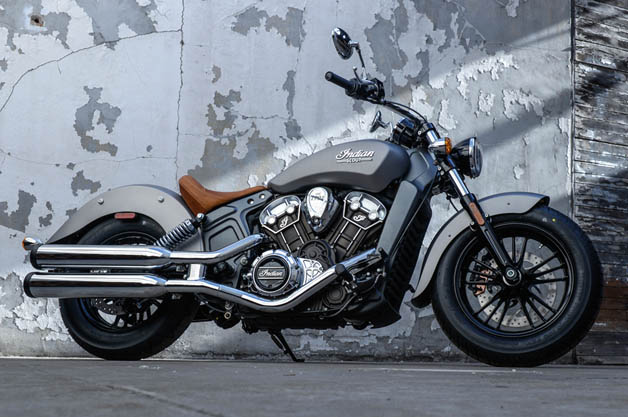
I'm pretty excited about the 2015 Indian Scout.  The bike is strong evidence that Polaris has this latest incarnation of the Indian Motorcycle company dialed in, which is great considering Indian's prominence in American motorcycle history.

More importantly (to me), the Scout's engine appears to be a harbinger of even more exciting things to come.  I really think the Scout may usher in a new era of large-scale diversification in American-made bikes.  For years I've found it sad that Harley Davidson refuses to compete with the rest of the world in any segment outside cruisers.  And I was disappointed when Polaris decided to do the same thing with Victory.

Please understand, I love the fact that small manufacturers like Erik Buell Racing (EBR) and Motus are making the bikes Harley and Victory don't have the guts to make.  But small manufacturers lack the economies of scale that make great products affordable for us ordinary folk.  I just can't afford a Motus or an EBR for now.

Now that Polaris has Indian to take the traditional cruiser fight to Harley, however, Victory is free to branch out into non-cruiser bikes.  And the Scout's 1130 cc, narrow angle V-twin is the power plant that can finally make it happen.

Check out this dynamometer graph from Motorcycle USA.


Tue, 85 hp isn't all that impressive for an 1130 cc, dual overhead cam, four valve per cylinder V-twin.  Keep in mind that these numbers are taken at the wheel (after losses to friction through the drive train), and that the engine is in a relatively mild state of tune, as befitting a cruiser.

That torque curve, though, is beautiful.  From about 2,600 rpm to almost 8,000 rpm, torque remains fairly constant.  That is a very flexible engine.  There seems to be a lot of room for Polaris/Victory to adapt this engine to many different uses - from a cafe racer, to an adventure touring bike, to (dare I say it?) a 1200 cc, V-twin super bike.

Imagine a major American motorcycle manufacturer with an honest-to-goodness full line of street bikes that an ordinary Joe can afford.

Hey, I can dream, can't I?

Hand Grip Strength and Longevity

I wrote earlier that the Muscle Mass Index predicts longevity far more effectively than the far more commonly used Body Mass Index (BMI).  A couple days ago, the NYT published an interview in which Warren Sanderson, a professor of social and behavioral sciences at Stony Brook University, explains that hand grip strength predicts longevity.
Hand-grip strength is an amazingly good predictor of future rates of mortality and morbidity, or sickness. It’s been measured for individuals in surveys across the world. We now have comparable data on about 50,000 people from the U.S., many European countries, Japan, South Korea, China. A substantial body of research suggests that this can be used as a reliable predictor of aging.
Here is the abstract from the study referenced in the NYT article.
BACKGROUND AND PURPOSE: One use of clinical measures is the prediction of future outcomes. The purpose of this systematic review was to summarize the literature addressing the value of grip strength as a predictor of important outcomes. 
METHODS: Relevant literature was located using 4 bibliographic databases, searching article reference lists, and perusing personal files. 
RESULTS: Forty-five relevant research articles were found. The research involved both healthy subjects and patients; it tended to focus on middle-aged and older adults. The primary outcome addressed was mortality/survival (24 articles), but disability (9 articles), complications and/or increased length of stay (12 articles), and other outcomes were also examined. Low grip strength was shown consistently to be associated with a greater likelihood of premature mortality, the development of disability, and an increased risk of complications or prolonged length of stay after hospitalization or surgery. 
CONCLUSIONS: Given its predictive validity and simplicity, dynamometrically measured grip strength should be considered as a vital sign useful for screening middle-aged and older adults. 
It's frustrating that Prof Sanderson doesn't even bother to ask what seems to me an obvious question: why does hand grip strength predict longevity and morbidity so well?

Aren't researchers supposed to ask questions like that?  Isn't that a big part of research in any field?  And while we're at it; aren't such "why" questions a big part of journalism?  The interviewer didn't bother to ask the obvious question either!
635 lb deadlift at the 2014 CrossFit Games

Not that anyone asked me (when have I ever let that stop me?), but I think I know the answer, and it goes back to the Muscle Mass Index.

As a general rule, a person who is stronger overall will have more hand grip strength than a person who is weaker overall.

For example, a person with a 500 lb deadlift 1-rep-max has a far stronger grip than a person with a 200 lb deadlift 1-rep-max, because the deadlift requires the lifter to grip the bar to lift it off the ground.  But the 500 lb deadlifter's entire body is also stronger than that of the 200 lb deadlifter, because the deadlift employs pretty much every muscle in the body.  Consequently, the 500 lb deadlifter has greater muscle mass than the 200 lb deadlifter.

That's why hand grip strength predicts health and longevity.  It's not because fit, healthy people's hands are stronger than frail, sickly people's hands, it's because fit, healthy people's entire bodies are stronger than frail, sickly people's bodies.

Prof Sanderson, however, doesn't bother to ask the question, so he never arrives at the answer.  Instead, he makes the following silly - and potentially dangerous - statement.
Measuring hand-grip strength is very simple and cheap. We think every primary care doctor should have a dynamometer in their office. At every visit, the doctor could check grip strength for older patients. If someone was in the 45th percentile for their age and the measurements were stable, great. But if that person suddenly dropped to the 25th percentile, then that’s a sign that the doctor should look seriously at what might be going on. 
We view this in a larger context. There are going to be more measures than this one. We want to look next at measures of lower-body strength. It may very well be a measure that looks at how long it takes someone to rise from a chair. Then, we will have an upper-body measure and a lower-body measure, and we can compare the two in terms of how aging goes. We envision one day that physicians will have standard age-related tables for these measures and chart their patients’ progress, just as they do with height and weight for children.
Source
It's silly because there is no need to measure upper and lower body strength separately.  A full-body lift, like the deadlift, measures the strength of the entire body simultaneously.

It's dangerous, because if doctors really did follow Prof Sanderson's recommendation and started testing their aging patients' grip strength, they'd also require their patients to do dumb things like squeezing hand grip strengthening devices to improve their health and longevity.  Again, the point is not that stronger hands = longer life.  The point is that stronger body = longer life, and it just so happens that stronger body also = stronger hands.

A far better test would be the deadlift, because it actually measures what matters - the overall strength of the entire body.  An even better measuring tool would be the squat, because it requires more mobility and flexibility than the deadlift.  A person that can continue to squat to depth well into old age will likely be far more independent, and therefore have far better quality of life, than one who can't.

Ideally, the test would be the CrossFit total - squat, press and deadlift.  However, that much testing is probably not necessary.  The squat or deadlift alone would do.  And if doctors adopted that kind of test, it would encourage a lot more people to train for full-body strength, which is the most useful thing a person can do to improve health and fitness in the long run.

Some will protest that the elderly can't lift weights.  It's too dangerous for them, they'll claim.  To these critics I say, watch this 73-year-old grandmother with a deadlift PR of 181.5 lb.


You can bet Ms Sandra would crush the hand grip strength test.

Monday, September 15, 2014

Scott Panchick's 500 lb Back Squat

Scott Panchick, three-time CrossFit Games competitor and 5th-place finisher in 2014, recently posted a video of himself squatting 500 lb, a new PR for him.


When you film a squat from a relatively high angle, looking down at the athlete, it's often difficult to tell if the athlete lowered his/her hips below the top of the knee, as they should.  Scott Panchick's squat dropped so low that its below-parallel depth was easy to see even from the relatively high camera angle.

Mr Panchick lists his weight as 190 lb on the CrossFit Games website.  A 263% body weight back squat is an impressive accomplishment, but the reason I posted this here is that I think this example - along with many others - contradicts some criticisms commonly leveled at CrossFit as a training regimen.

The most obvious is that CrossFit keeps people weak.  Clearly, Scott Panchick and all other CrossFit Games athletes are far from weak.  Yes, they are elite athletes, and therefore not representative of all people who train using CrossFit.  However, their programming demonstrates how pretty much anyone can train with CrossFit and get a whole lot stronger.  Mr Panchick's training sessions, like those of most CrossFit Games athletes, typically start with a weightlifting movement, followed by some high intensity conditioning.  Obviously, few of us would want to employ the level of volume or intensity they do, but if a person scales that kind of program to his/her ability level and progressively increases the load over time, that person could continue to improve for years, just as all CrossFit Games athletes have.

That brings me to the second criticism often leveled at CrossFit.  Critics often claim CrossFit only helps novices improve, and that improvement ceases after a few weeks or months of training.  Mr Panchick and other CrossFit Games athletes are clearly far from novices, and yet they continue to improve year after year, just as ordinary athletes of all ages in CrossFit gyms all over the world continue to improve year after year.  That wouldn't be possible if CrossFit only worked for novices and only for a few weeks or months.

Finally, I'll address one criticism that is accurate, but misses the point.  Many who see Mr Panchick's squat will comment that if he focused exclusively on strength training, he'd be even stronger.  That is undoubtedly true.  It is also true that if a decathlete focused exclusively on the 100 m sprint, or the long jump, or the shot put, or the pole vault, or the 1500 m run, he'd be much better at sprinting, jumping, shot putting, pole vaulting or running 1500 m.  But then he could never hope to earn the title of "World's Greatest Athlete".

Likewise, the CrossFit Games does not claim to find the strongest on Earth, but "the fittest on Earth".  Fitness is a combination of ten components of which strength is only one.  It's the most important one, but it's still only one.  Were Mr Panchick to focus exclusively on strength, his competence in the other nine components would decrease.  That's fine for a power lifter who is chasing absolute strength exclusively, but not for an athlete who wishes to maximize fitness as a whole.

Mr Panchick comments on his Instagram video that he is also chasing a five minute mile.  Think about that.  Many people can run a five minute mile.  Many can squat 500 lb.  How many can do both?

As Rich Froning said upon winning his fourth straight CrossFit Games, "This stuff works".

Monday, August 18, 2014

Matt Chan Takes a Bad Spill

Talk about unknown and unknowable!  Multiple-time CrossFit Games athlete, Matt Chan, and his wife Cherie (one of the coaches at my Level 1 course) went on a seemingly benign mountain bike ride and Matt took a spill that almost killed him.


Check out the graphic scene at 4:15!

My favorite quotes from the video:
Cameraman: You're definitely the most jacked dude on Earth using a walker.
Cherie: That's what the nurses thought, too.
...
Cherie: My mother-in-law said, "This is why you guys do CrossFit, because when something like this happens - and you never know when it's going to happen - you can bounce right back, because you're so much stronger.  Look how much better he can support himself because his upper body is so strong."
You got it, Mama Chan.

Thursday, August 14, 2014

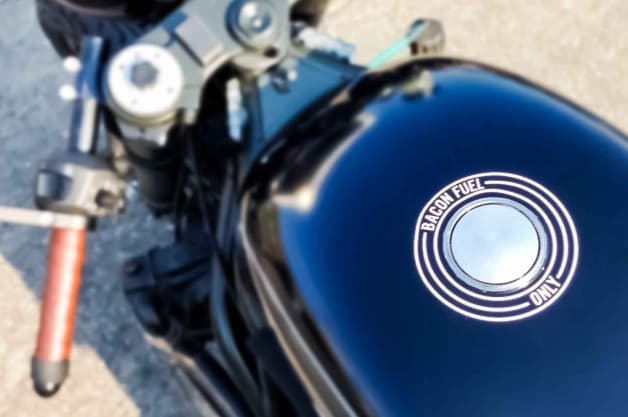
Bacon Powered Motorcycle

I love motorcycles, and I love bacon.  How did I not think of this first?

Source: Auto Blog
The machine started life as an EVA Track T800CDI diesel-powered motorcycle, hailing from The Netherlands, and a bacon-grease conversion was performed by the crew from CSE Engineering, who are accompanying the procession as it crosses the western half of the United States as part of a 12-person team that is filming and documenting the adventure
 Here's a series of videos on the bike's and its rider's adventures across the US.


Motorcycles and bacon - what could be better?

Wednesday, August 13, 2014

Philippine Marine Scout Sniper Test

I don't trust anyone this much.


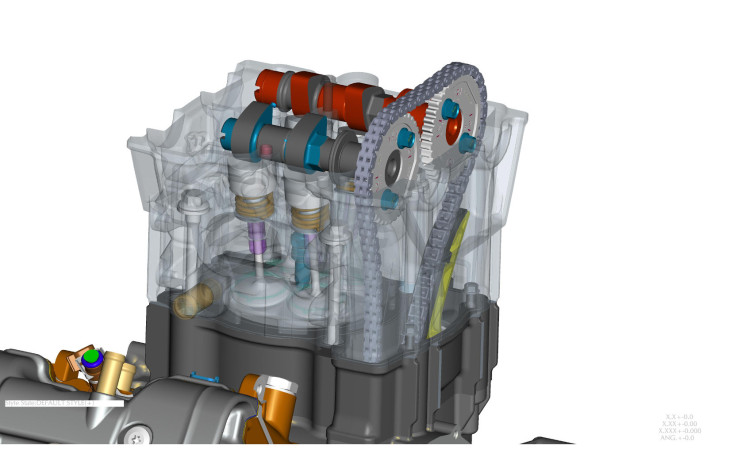
Indian Scout Engine CAD Drawings

Motorcycle Daily has more CAD drawings of the Indian Scout's 1133 cc, 60-degree V-twin engine.

Source: Motorcycle Daily


Source: Motorcycle Daily

I don't know Polaris' plans for this engine, but I can think of several exciting possibilities.  For example, this engine is somewhat similar to the Rotax-designed 1125 cc V-twin the Buell Motorcycle Company used in the last sport bike they produced before Harley Davidson shut them down.  In a higher state of tune, the Scout's engine could easily crank out 125 hp.  Polaris could even bore and stroke it out to 1190 cc like Erik Buell Racing did with the old Rotax engine and bump it up to 150 hp or more (EBR's current engine is wholly designed and built by EBR in East Troy, Wisconsin).

Such an engine would be a lot of fun in a sporty standard, or a street tracker, or even an adventure bike.  Maybe the Indian name is too wrapped up in history to support such bikes (then again, maybe not), but Polaris could decide to let Indian carry the heritage flag and finally begin to diversify Victory beyond cruisers and onto something more exciting.

Wednesday, August 6, 2014

Indian Motorcycles Releases New Scout!

For the second year in a row, I forgot all about Sturgis until it was already going (not that I'd actually attend), and for the second year in a row, the resurrected (for the 5th time?) Indian Motorcycles - now part of Polaris Industries - released a new bike.  Last year, it was the Chief.  This year, it's the Scout.

Source: Auto Blog

Check out these videos from Indian Motorcycle's YouTube channel.


Pretty cool, right?  Here's my favorite look for the bike, so far.

Source: Cycle World

Cycle World, Motorcycle Daily and Motorcycle USA (among others, I presume) have all published first ride impressions online, and their reviews are mostly glowing, with only minor nits to pick.  The Cycle World review seems to verge on sycophancy, but maybe the bike really is that good.

Source: Motorcycle Daily

Just looking at it, you can tell that Indian decided to ride the fence between tradition and high technology.  The frame is mostly cast aluminum, as opposed to the traditional tubular steel cradle frames of traditional cruisers.  The typical cruiser engine is a narrow-angle V-twin with air cooling and two push-rod-actuated valves per cylinder.  The Scout's engine features a 60 degree V angle, liquid cooling, four valves per cylinder, dual overhead cams and a counter-balancer.  It doesn't even pretend to be air cooled, like the Harley-Davidson V-Rod with its fake cooling fins.  Actually, besides the fake cooling fins, the Scout's engine specs are pretty similar to that of the V-Rod.

Either way, an 1133 cc engine that generates 100 hp at the crank is very lightly stressed, which leaves lots of room for owners and tuners to squeeze a lot more out of it.

Source: Motorcycle Daily

In short, it's not as traditional as the Harley-Davidson Sportster (the quintessential American motorcycle), but it's nowhere near as radical as the Ducati Diavel.

The Sportster seems like the Scout's most natural competitor.  As far as specs go, the Scout beats the Sportster hands down.  It's lighter, more powerful (by 32 hp), generates similar torque and can lean further into a corner.

Source: Motorcycle Daily.  Click to enlarge.

You can read a more comprehensive list of specs for the Scout here, and for the Sportster here.  Unlike most motorcyclists, however, cruiser riders are notoriously impervious to spec sheets.  They choose bikes for far more subjective reasons.

The one disappointment about this bike is that - like the Sportster - it doesn't really live up to its own heritage.  But then, no bike could.  The Scout and the Sportster were the badass sport bikes of their day.  They competed in everything from road races, to flat tracks to off road scrambles.  And that's why it's impossible for any bike to live up to that heritage.  Bikes today are so specialized, that no bike could be converted into both a champion road racer and a champion enduro.

Still, it's a cool bike.  At first I thought I wasn't in its target demographic because I don't ride cruisers.  But, maybe I am, because this bike might just change my mind.  Maybe if they made a street tracker version...

Source: Roland Sands Design

... with this classic look.

Source: Wikimedia Commons

The scabbard is key.


1000 Yard Shot With a 9mm Revolver

I could do that... with a sniper rifle.  (probably not)


Sunday, July 27, 2014

Jackie Stewart on Racing In Monaco in the '70s

Is he talking about a car, or a woman?


Surely you've heard the term, "flying by the seat of your pants".  It was coined back in the early days of flying (before or during WWI).  Planes back then had little or no instrumentation.  The only feedback the pilot received from the plane was the very physical feedback from the stick, the pedals (both of which were directly connected to the control surfaces via levers and cables) and the seat.  And since the seat was the largest point of contact, it delivered the most feedback.

Though F1 cars of the '70s were far more sophisticated than WWI planes, they still had no electronics.  The driver's most important sources of feedback were physical - the wheel, the pedals, the shift knob and the seat.  Many consider that time the golden age of motor sport because there was a lot more experimentation and artistry to it back then.

Source: Red Bull
I can't really comment on that, but I know that the human element is one reason I prefer
motorcycle racing to car racing.  In motorcycle racing, the rider is always fully visible.  The spectator can watch the rider shift his weight forward to resist a wheelie, or backward to resist diving, or to one side or the other to assist the bike in a turn.

Intellectually, I know the race car driver is just as active as the motorcycle racer, but it's much more exciting to actually see what is happening, and no, the cameras inside the cars' cockpits don't compare to watching a racing phenom like Marc Marquez correcting a line by pushing off the racing surface with his knee and/or elbow.

Electronic aids are great in everyday life.  Anti-lock breaks, traction control, etc. undoubtedly help us ordinary folk avoid accidents, but we watch motor sports for the same reason we watch other sports - to marvel at people vastly more talented than we are doing things we could never do.  Because of that, it's probably a good thing that most sanctioning bodies ban electronic driver aids.

Incidentally, Jackie Stewart reminded me of another saying I've only heard in military settings: "slow is smooth and smooth is fast".  I don't know where or when that one was coined, but I know it's often true.

Saturday, July 26, 2014

YiaYia* Doesn't Approve

These seem to be from 2012, so I don't know why I haven't seen them before, but they're hilarious!


And, just in case the gentlemen feel left out...


H/T Dalrock

*Apparently YiaYia means grandma in Greek.

Monday, July 21, 2014

Exodus: Gods and Kings


Christian Bale is one of my favorite actors right now, and Ridley Scott directed some of my favorite movies (Alien, Black Hawk Down, Gladiator), but I have a really hard time seeing anyone other than Charlton Heston as Moses.

Sunday, July 20, 2014

Happy Apollo 11 Day!

In celebration of the 45th anniversary of the Apollo 11 moon landing, here's a video of Buzz Aldrin punching out a dude who called him a liar.


A Tale of Three Restaurants (and Guns)

The Pit Authentic Barbecue restaurant in Durham, NC posted a sign that read...
no weapons, no concealed firearms 
Shockingly, three criminals paid the sign no heed.
Authorities said just before 9 p.m. Sunday, three men wearing hoodies entered the restaurant through the back doors with pistols, and forced several staff members on the floor. 
Maybe that was the problem.  The criminals must have missed the sign because it was posted at the front of the restaurant and they busted in through the back.
Officials said the suspects assaulted two employees during the crime, but they were not seriously injured. 
That's a relief, but that outcome depended 100% on the restraint the criminals exercised over themselves.  Does depending on a violent criminal's self-restraint seem wise to you?
Owner Greg Hatem also said there were a few patrons in the dining room while the robbery was happening in the kitchen area. Workers were able to ask them to leave, and got them out safely through the front door. 
“We’re offering $2,000 for the arrest and conviction of these guys,” Hatem said. “We take this very seriously. We want to make sure our guests and our staff are taken care of.” 
By rendering them defenseless against armed, violent criminals?

That event inspired another restaurant owner to do the opposite.
Gun control is a hot topic across the country, and one East Tennessee restaurant owner is making her opinion very clear by posting a 'Guns are Welcome' sign on the front door of her family-friendly establishment.
...
Floyd said she posted the signs about a month ago after reading a story out of North Carolina. 
"They had put up a sign that said 'No Weapons Allowed' and they were robbed at gunpoint two days later. The convenience store manager was shot," said Floyd. "And that got me thinking. I lost a whole group of motorcyclists because they thought I didn't allow weapons. But I believe it's ok to carry as long as you have a permit." 
The restaurant does not sell liquor, and Floyd said she asks anyone who orders a beer if they are carrying.


That story reminded me of a previous one from Spokane.
Employees at a coffee shop in Spokane, Wash., are taking matters into their own hands after their store was robbed three times in less than a month. 
Sara Chapel, who owns Jitterz Java, is encouraging her employees to start carrying guns while on the job in order to protect themselves... 
“A couple of them bring handguns every day, no matter what shift it is. There is always a gun here now,” she said. “I would rather have it and need it, than need it and not have it.”
It's encouraging that in both cases in which the restaurants that supported the human right to self defense received mostly positive feedback from customers.
The coffee shop has so far received a flood of support on social media. 
“As long as the employees are well-trained in the use of firearms, I agree. Potential robbers will think twice before approaching them again,” Facebook user Mary Ann Gillispie Rohner wrote. 
“Citizens are the first responders in situations. I’m proud these ladies are prepared to protect themselves, like me!!” wrote Kelly Walker-Wincentsen.

The ladies of Jitterz Java also helped prove that armed self defense works.
On Sunday, a man aggressively tried to open a window at Jitterz Java and appeared to have a gun. The barista kept the window locked, grabbed her gun and called police. The man took off before police arrived.
To be clear, the owners of these establishments have the right to decide whether or not to allow guns on their property.  And potential customers have the right to decide whether or not to spend their money at those businesses for that - or any other - reason.


Saturday, July 19, 2014

If Ted Kennedy Drove a VW...

Via Instapundit:


"HEH", indeed!

Wednesday, July 16, 2014

Murder Rates Decrease as Concealed Carry Increases

As I pointed out before, violent crime in the US decreased from its peak in 1993...

Source: Pew Research

...even as gun ownership increased.

Click to enlarge.  Source: NSSF

That doesn't prove that more guns = less crime, but it does prove "Liberals'" assertion that more guns = more crime false.  Now, the Crime Prevention Center published a study that demonstrates that murder rates in the US decreased as the rate of Concealed Carry Permit holders increased.


The study also breaks down the rate of Concealed Carry Permit holders in each state.  The states with the highest rate of Concealed Carry Permit holders are...
South Dakota   12.03% 
Indiana            10.79% 
Alabama          10.21% 
Utah                9.75% 
Tennessee        9.35% 
Pennsylvania    8.67% 
Iowa                8.53% 
Washington      8.49% 
Florida             8.23%  
Georgia            8.00%
Alaska, Arizona, most of Montana, Vermont and Wyoming do not require permits for concealed carry within the state.  Residents of those states that obtain CCPs do so in order to carry their guns legally when they travel to other states.  This is called reciprocity.  I mention all that because, although none of the states that allow Concealed Carry without a permit (often referred to as Constitutional Carry) are in the top ten, the proportion of people that carry in those states could very well be higher than any of the top ten states.  We can't know the actual proportion in those states because their residents can carry concealed firearms legally without a permit.

Every time the issue of Concealed Carry comes up, "Liberals" claim that CC leads to more violent crime, more accidental shootings, etc.  The argument I keep hearing and reading is that Concealed Carry results in wild west shootouts and blood running in the streets.

Obviously, the data prove those fever dreams false.  

Source: WaPo

All 50 states now have some form of Concealed Carry - every single one.  And yet, not only have dystopian "Liberal" fantasies about wild west shootouts and blood in the streets failed to materialize, homicides committed with guns, non-fatal crimes committed with guns and unintentional firearm-related fatalities decreased.

In other words, this doesn't necessarily prove that Concealed Carry results in less crime and fewer firearm-related accidental deaths, but it definitely proves "Liberals" wrong when they claim that Concealed Carry results in more crime and more firearm-related accidental deaths.

So, if Concealed Carry does not result in more crime or more firearm-related accidental deaths, why do "Liberals" continue to oppose Concealed Carry?  Because "gun control" ins't about guns, or crime or safety.  It's a bout expanding government control over law-abiding individuals.


Tuesday, July 15, 2014

Weird Al's "Word Crimes"

I've been a "Weird Al" fan since "Eat It".  I haven't kept up with his song parodies in a long time, but tonight I stumbled onto "Word Crimes" and almost busted a gut laughing.


I promise to do my best to avoid abusing the English language.  Enjoy!


Monday, July 14, 2014

Muscle Mass Predicts Longevity Better Than BMI

I'm on record stating that BMI is a crock.  I arrived at that conclusion through reasoning, not scientific research.  But now there is scientific research that demonstrates that BMI is a poor predictor of longevity, and that muscle mass is a better predictor of longevity.
Doctors routinely measure a patient's body mass index, or BMI. And if that weight-to-height ratio points to obesity, the doc might prescribe exercise, to shed the extra pounds. But when it comes to longevity, a focus on weight loss may be misplaced. Because BMI isn't actually a very reliable indicator of life span. A more useful measure, some physicians say, might be muscle mass. 
Researchers analyzed BMI and muscle mass data from more than 3,600 seniors in a long-term study. And they tracked which seniors had died, a decade later. Turns out BMI wasn't much good at predicting chance of death.

But muscle mass was: more muscle meant better odds of survival. The study appears in The American Journal of Medicine. [Preethi Srikanthan and Arun S. Karlamangla, Muscle Mass Index as a Predictor of Longevity in Older-Adults]
From the abstract:
Objective
Obesity (as defined by body mass index) has not been associated consistently with higher mortality in older adults. However, total body mass includes fat and muscle, which have different metabolic effects. This study was designed to test the hypothesis that greater muscle mass in older adults is associated with lower all-cause mortality. 
Methods
All-cause mortality was analyzed by the year 2004 in 3659 participants from the National Health and Nutrition Examination Survey III who were aged 55 years or more (65 years if women) at the time of the survey (1988-1994). Individuals who were underweight or died in the first 2 years of follow-up were excluded to remove frail elders from the sample. Skeletal muscle mass was measured using bioelectrical impedance, and muscle mass index was defined as muscle mass divided by height squared. Modified Poisson regression and proportional hazards regression were used to examine the relationship of muscle mass index with all-cause mortality risk and rate, respectively, adjusted for central obesity (waist hip ratio) and other significant covariates. 
Results
In adjusted analyses, total mortality was significantly lower in the fourth quartile of muscle mass index compared with the first quartile: adjusted risk ratio 0.81 (95% confidence interval, 0.71-0.91) and adjusted hazard ratio 0.80 (95% confidence interval, 0.66-0.97). 
Conclusions
This study demonstrates the survival predication ability of relative muscle mass and highlights the need to look beyond total body mass in assessing the health of older adults.
I probably shouldn't have read the comments to the Scientific American article, but I did, and they are sadly typical of the kind of ignorance, laziness and plain stupidity one encounters on the internet.
Jerzy v. 3.0. March 21, 2014, 7:23 AM
Low muscle mass in elderly people may mean that all their systems are falling already. Questionnaire about exercise might be more meaningful. Correlation doesn't imply causation, sorry.
jtdwyer to Jerzy v. 3.0. March 21, 2014, 7:34 AM
Exactly! What's most important here is that BMI is a (loosely) quantifiable indicator of lifestyle health for children and young adults - for whom lifestyle factors contribute most greatly to long term health and survival.
Unfortunately, increasing muscle mass in the elderly is not likely to reduce morbidity! 
The responders obviously didn't read the abstract, because the answer to their objection about frailty in old age, near death is right there where I highlighted it in bold.  The researchers measured the subjects' muscle mass index when they were 55 (men) or 65 (women) years old between 1988 and 1994, not when they died.  They analyzed the causes of mortality in 2004.  They also eliminated all subjects who were underweight in the first two years after the survey to eliminate individuals whose "systems are failing already".

Worse still, the responders obviously didn't even bother to read the article to which they responded.
There's no cause-and-effect here—just correlation for now. But study author Preethi Srikanthan, of U.C.L.A., has this recommendation: "Get up and start moving. Focus on trying to maintain the maximum amount of resistance training that you can, and stop worrying so much about dropping calories." Which could take a little weight off your mind, too.
Jeeze.

Anyway, Dr Srikanthan's advice isn't all that helpful.  How exactly does one "get up and start moving" and "focus on trying to maintain the maximum amount of resistance training that you can"?

People gain muscle and strength most easily in their teens, twenties and thirties.  After that, a person's hormone profile makes it increasingly more difficult.  The solution then, is to increase ones muscle mass as much as healthfully possible while young and maintain it as much as possible as one ages.  But how?  And what if one is already past 50?  Is it too late?

One shouldn't expect a physician to have the answer (it's not their specialty) and Dr Srikanthan doesn't, but that's OK, because Mark Rippetoe does.
Strength — as well as a tolerance for childish nonsense — is the thing we all lose as we age. Squatting down, standing back up, putting things overhead, pulling things up the driveway, loading the groceries, wrestling with the grandkids, teaching the dog who’s boss, mowing the yard, putting the broken lawnmower in the truck again: simple physical tasks we took for granted years ago are often problems for older, weaker people, as well as a source of potential injury that can be expensive and debilitating. 
Source: PJ Media
For most of us, this happens because of inactivity. If you do not use your muscles to produce enough force to maintain their ability to do so, it shouldn’t be surprising that they become less capable of doing it. And walking, running, riding a bicycle — physical activities whose performance is not limited by strength for even moderately active people — cannot increase or even maintain strength.
So, how does one fix this problem?
The absence of skeletal loading is typical for older people, since we now hire the heavy work done instead of doing it ourselves. And just like muscles, bones adapt to the “stress” of being unloaded by getting thinner and less dense. Running is not a weight-bearing exercise in the sense that strength training is. It’s just a “you-bearing” exercise, and the impact of repeated footfalls affects only the legs. In fact, people sensitive to impact have far fewer problems with the static nature of barbell training than they do the repeated impacts of running. A barbell sitting on the shoulders or held overhead in the hands loads the skeleton in a way that other exercises cannot do, and a strength training program always results in the preservation of bone density. Coupled with the strength necessary to control your balance, this is the best insurance against the tragic and often fatal pelvic fracture that an older person can acquire. 
Source: PJ Media
But the loss of strength can be slowed down quite a bit, and for older people who have never trained before, a vast amount of improvement can take place in a relatively short span of time. I have trained many older competitive “masters” lifters who started out as disinterested gym members and then experienced a sudden change of attitude when their strength doubled with six months of lifting weights. These people will tell you about the difference strength training — not running — has made in their lives. 
Here's a quote from the 3rd edition of Starting Strength: Basic Barbell Training.
Weight training is precisely scalable to the age and ability of the individual lifter... We have 11-pound bars - or even broomsticks - for kids to start lifting with... This logic also applies to every group of people who might be viewed as a "special population" - the frail elderly, people with skeletal and muscular disease, the completely sedentary, the morbidly obese... In fact, the adaptation to weight training is precisely the adaptation that these special populations need... (pages 322-323)
For further details, read the rest of Rippetoe's articles on PJ Media, then get the book.

Finally, the subject of BMI reminded me of this.
This is Jason Khalipa.

Jason Khalipa BMI = 31 (obese)

See what I mean?  BMI is a crock.


Monday, July 7, 2014

Americans Dump Margarine, Return to Butter

Butter's shifting fortunes also reflect the vicissitudes of thinking on healthy eating that rattle the national diet. Families for decades opted for vegetable spreads because of concerns about butter's high concentration of saturated fat, only to be told more recently that the trans fats traditionally contained in margarine are just as unhealthy. Many Americans also have altered their thinking on how important reducing all fat is for controlling weight.
...
Courtney Shanower, a 33-year-old pizza-restaurant owner in Sugarcreek, Ohio, said she grew up in a family that bought tub margarine. "I didn't use butter for a long time because I was weight conscious," said Ms. Shanower, a mother of two. "When I turned 30 I started thinking about osteoporosis and calcium and thought I'm not getting the nutrition I need. So I stopped counting calories, and started thinking about nutrition."
In reference to the section in bold above, there was never any need to eliminate saturated fat due to health concerns, because there is no correlation between saturated fat and heart disease.
...the new research, published on Monday in the journal Annals of Internal Medicine, did not find that people who ate higher levels of saturated fat had more heart disease than those who ate less. Nor did it find less disease in those eating higher amounts of unsaturated fat, including monounsaturated fat like olive oil or polyunsaturated fat like corn oil.
...
The smaller, more artery-clogging particles are increased not by saturated fat, but by sugary foods and an excess of carbohydrates, Dr. Chowdhury said. “It’s the high carbohydrate or sugary diet that should be the focus of dietary guidelines,” he said. “If anything is driving your low-density lipoproteins in a more adverse way, it’s carbohydrates.”
As for trans fats, like margarine...
The researchers did find a link between trans fats, the now widely maligned partially hydrogenated oils that had long been added to processed foods, and heart disease. But they found no evidence of dangers from saturated fat, or benefits from other kinds of fats.
You can read a lot more details at the link.

Government agencies, like the US Department of Agriculture, and non-governmental organizations, like the American Heart Association, badgered Americans into replacing natural saturated animal fats (like butter) with artificial trans fats derived from oils extracted from vegetable seeds (like margarine) because the vegetable-based oils were supposedly healthier.  Now it turns out that the animal fats the USDA and AHA demonized (and continue to demonize) have no effect on heart disease, and the trans fats they pushed cause heart disease.

The USDA and AHA also badgered (and continue to badger) Americans into adopting low fat, high carbohydrate diets, and it turns out that excessive carbohydrate intake causes heart disease.

The WSJ article I cited above includes a chart I found very interesting.

Source: WSJ

Compare Americans' consumption of butter and margarine with their propensity for obesity.

Source: USA Today

Now Compare to these charts from the AHA's latest report on heart health in the US.

Source: AHA

Source: AHA

Americans decreased their butter consumption and increased their consumption of margarine (as per USDA and AHA recommendations), and got fatter and suffered more heart disease.  That doesn't mean that the USDA and AHA recommendations caused Americans to get fat and suffer more heart disease, but they definitely did not prevent what they were supposed to prevent.

So much for the experts.