Monday, November 18, 2013

JFK Conspiracies Explained

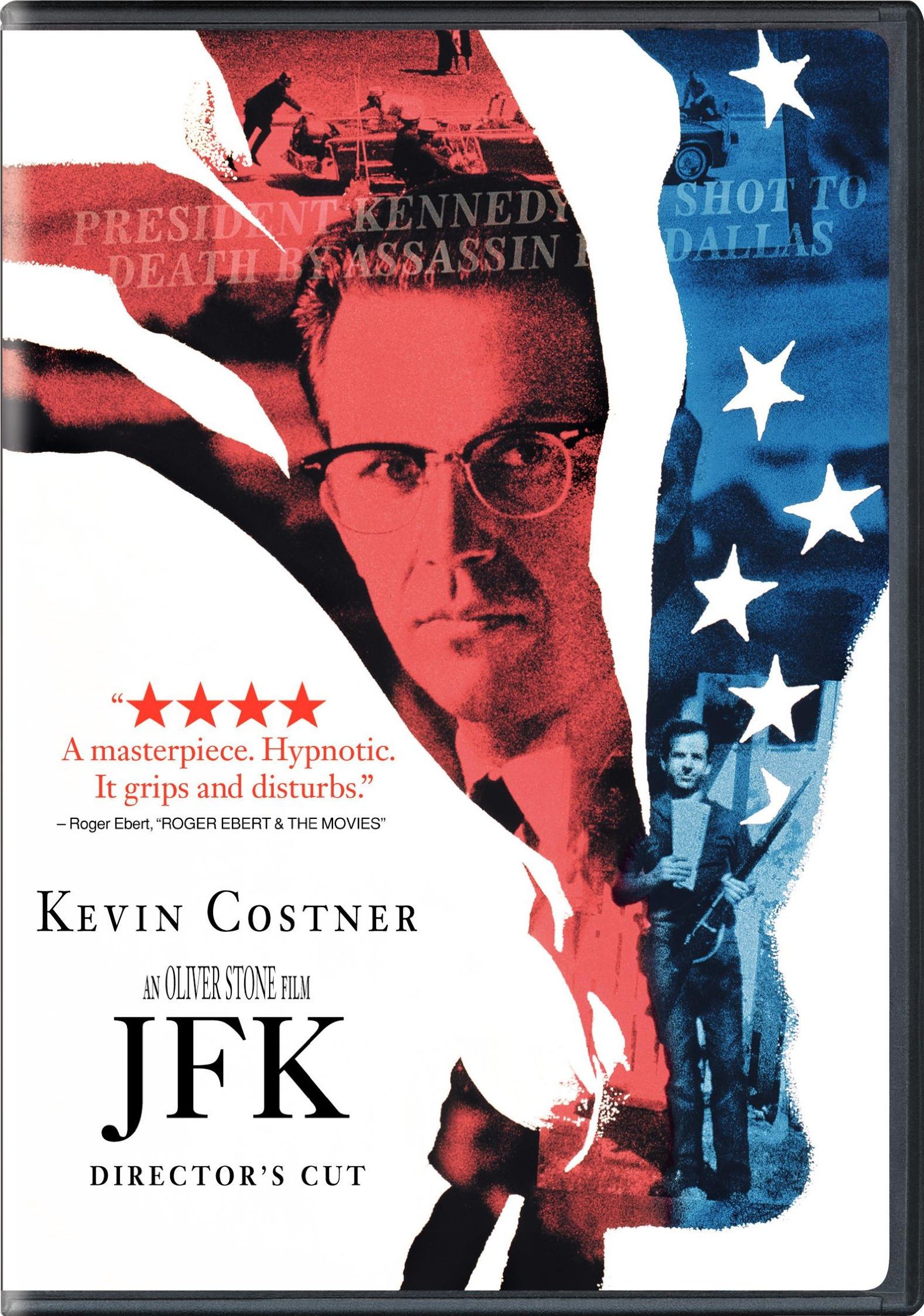
If you've never watched Oliver Stone's JFK, my advice is, "don't bother".  It's revisionist garbage.  It's not even artistic revisionist garbage. 

If you've ever wondered why there are so many JFK assassination conspiracy theories, and why they refuse to die, I recommend you read James Piereson's article in the WSJ.
Immediately after the assassination, leading journalists and political figures insisted that the president was a victim of a "climate of hate" in Dallas and across the nation seeded by racial bigots, the Ku Klux Klan, fundamentalist ministers and anticommunist zealots.
Sounds familiar.
Syndicated newspaper columnist Drew Pearson wrote that JFK was the victim of a "hate drive." Sen. Mike Mansfield, in a eulogy, attributed the assassination to "bigotry, hatred, and prejudice." 
All pretty standard, so far.
For his part, President Lyndon Johnson saw that his job as national leader was to supply meaning to the tragedy. "John Kennedy had died," he said later, "but his cause was not really clear. I had to take the dead man's program and turn it into a martyr's cause."
...
On the international front, Johnson feared a dangerous escalation of tensions with the Soviet Union.
...
Ironically, U.S. leaders adopted a line similar to the one pushed by the Soviet Union and communist groups around the world. They likewise blamed the "far right" for the assassination. A Soviet spokesman said that, "Senator [ Barry ] Goldwater and other extremists on the right could not escape moral responsibility for the president's death."
What was the truth, then?
The assassin was a communist and not a bigot or a right-winger. Oswald defected from the U.S. to the Soviet Union in 1959, vowing when he did so that he could no longer live under a capitalist system. He returned to the U.S. with his Russian wife in 1962, disappointed with life under Soviet communism but without giving up his Marxist beliefs or his hatred of the U.S. By 1963, Oswald had transferred his political allegiance to Castro's communist regime in Cuba.  
...
The assassin's motives for shooting Kennedy were undoubtedly linked to a wish to interfere with the president's campaign to overthrow Castro's government.
That explains why Stone would make a film like JFK.  Stone, like Oswald, is an admirer of, and apologist for Castro and Communism in general - as long as he doesn't have to live under its jackboot heel.

Stone clearly has trouble with the fact that his fellow ideologue (Oswald) murdered one of Stone's heroes (JFK) to protect and avenge another of Stone's heroes (Castro).  That kind of cognitive dissonance can drive anyone crazy.

Sunday, November 17, 2013

Students at Historically Black University Lose Insurance to Obamacare

Priceless!


Best lines:

  • It's totally unfair.
  • This stupidness is Obama's fault.  You haven't done anything Obama, and I'm disappointed in you.
  • We don't have that money [$3K/year expected for Obamacare-compliant insurance], we can't even afford books.
  • He says he's for his people, but actually, he's not.  He's actually putting money in white people's pockets instead of helping black people out.
  • He should've done his research a little bit better.
  • When did this pass?
  • I didn't know that was even a part of Obamacare. 
Obamacare was always - from the beginning - intended to screw over the young and healthy to subsidize the old and sick.  What did they expect?


Pres Obama: Government Makes Government Inefficient

Pres Obama explained why the Obamacare website is a lemon.
What is true is that, as I said before, our IT systems, how we purchase technology in
the federal government is cumbersome, complicated and outdated. And so this isn’t a situation where — on my campaign, I could simply say, who are the best folks out there, let’s get them around a table, let’s figure out what we’re doing and we’re just going to continue to improve it and refine it and work on our goals. 
If you’re doing it at the federal government level, you know, you’re going through, you know, 40 pages of specs and this and that and the other and there’s all kinds of law involved. And it makes it more difficultit’s part of the reason why chronically federal IT programs are over budget, behind schedule
And one of the — you know, when I do some Monday morning quarterbacking on myself, one of the things that I do recognize is since I know that the federal government has not been good at this stuff in the past, two years ago as we were thinking about this, you know, we might have done more to make sure that we were breaking the mold on how we were going to be setting this up. But that doesn’t help us now. We got to move forward.
So, Pres Obama recognizes that excessive federal regulations make it far more difficult (in some cases impossible) and far more expensive (often prohibitively so) to accomplish anything.

But it never seems to occur to him that excessive federal regulations (like Obamacare, for example) do the same to businesses.  It never seems to occur to him that the cost (time, money, resources, man-hours) of complying with all those regulations makes businesses less efficient, less productive, and less able to hire employees and grow the economy.

And, unlike government, businesses can't just confiscate people's money.

Amazing, isn't it?

Interview: "The Frackers"

Prof Reynolds interviews WSJ reporter, Gregory Zuckerman, about his new book, "The Frackers".


Do watch the whole thing, but a couple things stood out to me.

First, the fracking revolution could have just as easily taken place in Russia, China, or a number of other places, but instead it happened in the US.  One reason for that is stronger property rights in the US than in other countries.  Most fracking in the US takes place om privately owned land.  In most states, the land owner also owns the mineral rights for his/her land.  That means they can make more money from allowing a fracking firm to drill on their land, which gives the land owner more incentive to do so.

It's a great example of how liberty leads to opportunity, which leads to prosperity.

Second, oil giants like ExxonMobil did not initiate the fracking boom.  Smaller firms, whose wells were drying up and didn't have the resources to explore abroad, were more willing to take risks because, essentially, they had nothing to lose.

Anti-fracking regulations "Liberals" demand wouldn't hurt ExxonMobil, but they would kill those smaller firms.

Unfortunately, no discussion on hydraulic fracturing is complete without addressing anti-fracking hysteria.  It's worth noting, then, that former DOE secretary Stephen Chu, no fan of fossil fuels, stated that fracking...
...is something you can do in a safe way,” former Secretary of Energy Steven Chu said while speaking in Columbus, Ohio, on Sept. 18. He also said that it was a “false choice” to say that the country can either preserve the environment or acquire cheap natural gas.
Former Secretary of the Interior, Ken Salazar, stated that...
“I would say to everybody that hydraulic fracking is safe,” Salazar said during a conference in Las Cruces, N.M. He said that fracking was “creating an energy revolution in the United States.”
Chu and Salazar joined current Secretary of Energy Ernest Moniz, who in early September praised fracking as “a big contributor to our carbon reduction” and “a huge economic benefit. 
And now the British government has reached the same conclusion.
“There are risks but they can all be mitigated” through monitoring and regulation, Neil Dhot, a spokesman in London, said today by telephone. The report, compiled by an independent consultant, is funded by the water industry, he said.
Everything we do involves risk - even doing nothing.  An honest risk analysis of hydraulic fracturing, I believe, demonstrates that the financial benefits of fracking far outweigh the potential risks.

UPDATE: Speaking of fracking, the Bakken formation of North Dakota & Montana is projected to produce about one million barrels per day next year.


The growth of crude oil production in the Bakken region is part of a longer-term trend in drilling efficiency gains and has led North Dakota to rank second in crude oil production in the United States, behind only Texas.


UPDATE: Prof Reynolds has another outstanding column in USA Today in his series about "the America that works and the America that doesn't", which contrasts the successes of the frackers with the "train wreck" of Obamacare.
As I've written here before, there are two Americas: One that works, produces value, and overcomes problems, and one that for the most part doesn't work, consumes wealth, and produces more problems than it solves. 
The America that doesn't work was very much in evidence this past week, as the Obamacare roll out continued to be -- in Democratic Sen. Max Baucus' memorable phrase -- a "train wreck." Writing in The New Republic, John Judis observed that the Obamacare fiasco should make fans of activist government angry, because it will damage big government's brand for decades to come. Well, if you support big government because you think that politicians are more competent or honest than the rest of us, yes, it's a big bummer. Then again, if you really think so highly of politicians, you have more serious problems than that.
Read the whole thing.

Friday, November 15, 2013

Obamacare's Perverse Incentives

One can predict how people will respond to economic incentives with a reasonable degree of certainty.  In terms of public policy, that means that, in general, when you want less of something, you tax it.

For example, DOE Secretary, Steven Chu, proposed high gas taxes to give Americans an incentive to drive their gas-guzzling SUVs less.

When you want more of something, you subsidize it.  That's why governments subsidize "green" energy.

So, what incentives does Obamacare provide?
A key Obamacare incentive is an “employer mandate” that asks businesses to sponsor health insurance (or pay a penalty) if they have more than 50 full-time employees. It defines a full-time worker as one serving 30 or more hours per week. So a firm can avoid the mandate by having fewer than 50 people working full-time. 
Investor's Business Daily compiled a list of 363 employers that decided to cut their employees' hours to less than 30/week to avoid paying for their insurance.  Before you rail against those greedy, evil Capitalist pigs, please note that over 100 of them are public school districts, colleges and universities.

According to the CS Monitor...
  • Some 31 percent of franchise businesses and 12 percent of non-franchise businesses say they have already reduced worker hours because of the law.
  • About 27 percent of franchise businesses and 12 percent of non-franchise businesses have already replaced full-time workers with part-time employees because of the law.
  • Some 41 percent of the non-franchise firms say they already see health-care costs rising because of the law. 
  • As the franchise firms look toward the future, 28 percent of them say they’ll stop offering health coverage in 2015 because of the law. One-third of franchise businesses already do not offer health insurance.
Speaking of franchises, Papa John told us so.  Remember?  The following exchange is from an opinion piece John Schnatter wrote for the Huffington Post.
Reporter: "Do you think your -- you know -- franchise owners... are going to cut people hours back to make them part time instead of full time?" 
Me: "Well, in Hawaii there is a form of the same kind of health insurance and that's what you do, you find loopholes to get around it. That's what they're going to do." 
Reporter: "My understanding is that if you're a full time employee, which is 35 hours or over, you'd be covered. Or if you're part time then you wouldn't be. So wouldn't some business owners just cut people down like 34 hours a week so they wouldn't have to pay for health insurance?" 
Me: "It's common sense. It's what I call lose-lose."
Mr Schnatter was wrong about one thing; it's not common sense.  It's logic, but there isn't enough of it in circulation to consider it "common".

Another perverse incentive of Obamacare is that it encourages some middle class folk to earn less money so they qualify for a subsidy.
So what is Hammack going to do? If his income were to fall below four times the federal poverty level, or about $62,000 for a family of two, he would qualify for subsidies that could lower his premium cost to as low as zero. If he makes even one dollar more, he gets nothing. 
That’s what he’s leaning toward — lowering his salary...
There is yet one more perverse Obamacare incentive we must consider.
Cathy Wagner says she isn’t political and has never written a lawmaker, much less the
president, but with Obamacare she felt compelled. 
“I really just wanted him to know … I was so hopeful that this plan was going to move us forward, but in fact I think it’s moving us backward,” Wagner said.
Ah, yes.  The audacity of hope!
Wagner and her husband retired early. She was a nurse for 35 years and championed Obamacare, until she received a letter from her insurance company saying it was canceling her policy.
That sounds familiar.
“I was really shocked … all of my hopes were sort of dashed,” Wagner said.
There's that word again.
“’Oh my gosh President Obama, this is not what we hoped for, it’s not what we were told.’ “ 
And again!
She was shocked further to learn that for the same coverage she would pay 35 percent more and have a higher deductible. 
“Our premium for next year is going up to over $1,000 a month for two of us and we’re two fairly healthy individuals,” Wagner said. 
So, where is the perverse incentive?
For the first time she’s considering going without health insurance. 
“The whole plan was to get everyone enrolled so there’s a larger risk pool and our costs go down,” she said. “Wow, not at all what we’re seeing.” 
By making health insurance more expensive (the opposite of what it was supposed to do), Obamacare encourages many people (especially the young and healthy) to forego insurance and pay the fine instead.  Worst of all, Obamacare can't function without young, healthy people subsidizing the old and sick.

This is why the argument over the website - though entertaining - is futile.  The law is rotten to its core.  Fixing the website won't change that.

There's just one question left.  Is the rot a bug... or is it a feature?

UPDATE: I somehow forgot the most obvious - and potentially worst - perverse incentive Obamacare provides - the tax on medical devices.
Bloomberg columnist Megan McArdle calls this one of the big open questions. In her piece “Is Obamacare Pulling the Plug on Medical Innovation?” she noted: 
The only way to find out, of course, is to wait (though really, we’ll still end up arguing: If medical innovation falls, the law’s supporters can always say it would have fallen anyway; if it goes up or stays steady, the opposition can always argue that it would have risen further). But here’s one sign to watch: Venture-capital investment in medical technology seems to be falling fast. 
Is this related to Obamacare? Frustratingly, it’s hard to tell… [But] a tax on medical devices and a more stringent cost-control environment could hardly help. 
As a practicing physician, I’m deeply troubled by the possibility of any slowdown in innovation, especially because we’re on the cusp of a new round of potentially game-changing medical advances. Some recent examples include: 
3D printing of replacement body parts 
Personalized medicine using individuals’ genetic data 
* New diagnostic tests that can detect lung cancer with a breath 
* “Spleen on a chip” to fight infection 
Real-life tricorder 
Bionic eyes 
As McArdle notes in a separate piece, other innovations may be less glamorous but still vitally important in preserving quality of life, such as a new bladder control prosthesis that helps prevent urinary infections in patients with spinal cord injuries and neurodegenerative diseases. 
But many medical device manufacturers run on extremely thin margins. Small differences in the tax and regulatory environment can mean the difference between a product coming to market — or being abandoned as not worth the effort. 
It’s easy to see the lives saved by products that exist. But it’s almost impossible to know which lives would have been saved by innovations that never made it to market. This is just an application of Frederic Bastiat’s old principle of “the seen vs. the unseen.”
Remember, when you want less of something, tax it.  Why would we want fewer medical innovations?  Is there some advantage I don't see?

Mitt Romney Told You So

I never liked Mitt Romney much as a candidate, but by comparison...


And, oh, by the way; Joe Wilson was right.

Olympic Weightlifter Holley Mangold on ‘The Biggest Loser’ (Continued)

I'm not a fan of "The Biggest Loser", mostly because I disagree with their training methods.  For example, a 300 lb+ person probably shouldn't run at all.


Running applies a lot of stress to the body.  Good technique allows a runner to use his/her muscles, tendons and ligaments (i.e., elastic tissues) to absorb and damp that stress.  Though there are probably exceptions, It's unlikely that a 300 lb+ person knows how to do that, which means all that stress gets absorbed by the bones and cartilage of the lower legs - typically the knees.  That's bad news.

I am, however, a big fan of Olympic weightlifting.  And as I mentioned earlier, super heavy weightlifter Holley Mangold joined the cast.


Another reason I'm not a fan of "The Biggest Loser" is the inordinate amount of focus the producers place on contestants' sob stories (clearly, I'm not the target audience).

Squatting at the Olympic Training Center.  Courtesy, Hookgrip
Ms Mangold must not have a sob story, because they've given her very little screen time.  The clip above, however, gave her a chance to highlight her skill and provided a couple interesting quotes.

First, note that, in performing the clean, she caught the bar on her shoulders without gripping it.  Her wrist must still be bothering her.
I shattered my wrist during the Olympics and am now on the road to recovery. Before competing, I had some torn ligaments in my wrist. During the competition I was so determined to total that I tore every ligament, which made the bones scatter throughout my wrist. I came back to Colorado to do my surgery.
 In the clip, Bob Harper said, "I want to show Holley that she can be smaller and stronger.  Weight goes down, strength goes up."

Holley said, "ever since I lost weight and I thought it ruined my weightlifting... it's really hard for me to step back and say, 'I want to lose weight because... of me.'"

I'm not sure how the producers edited that comment.  I also don't know what she means when she says that loosing weight ruined her weightlifting.  When did she lose weight?  How much?  What did she do to lose weight?  How badly did her total suffer?

What I do know, however, is that there are women who are smaller and stronger than Holley.  Case in point, Tatiana Kashirina, current record holder in the clean and jerk (190 Kg = 419 lb).


I wish Ms Mangold all the luck in the world, both in her Olympic goals and her health goals.  And I hope her time on the show brings the sport of weightlifting more of the exposure it deserves.