Then-VP Al Gore signed the treaty, but the US Senate never ratified it, making it invalid in the US. Leftists, of course, blamed President Bush, because everything is Bush's fault. Supposedly, Americans' "Commercialism and greed overcome all common sense and thought for the welfare of future generations. This failure causes hatred not only of the Bush administration, but of American commercialism in general". Also, the refusal to ratify the Kyoto Protocol was a failure of American leadership in the world.
Sixteen years later, we "greedy" Americans must look more dastardly than ever, right? Wrong.
In 2012, a surprising twist and without ever ratifying it, the United States became the first major industrialized nation in the world to meet the United Nation’s original Kyoto Protocol 2012 target for CO2 reductions.

One word. Frack.
The largest drop in emissions in 2012 came from coal, which is used almost exclusively for electricity generation (see figure below). During 2012, particularly in the spring and early summer, low natural gas prices led to competition between natural gas- and coal-fired electric power generators. Lower natural gas prices resulted in reduced levels of coal generation, and increased natural gas generation—a less carbon-intensive fuel for power generation, which shifted power generation from the most carbon-intensive fossil fuel (coal) to the least carbon-intensive fossil fuel (natural gas).
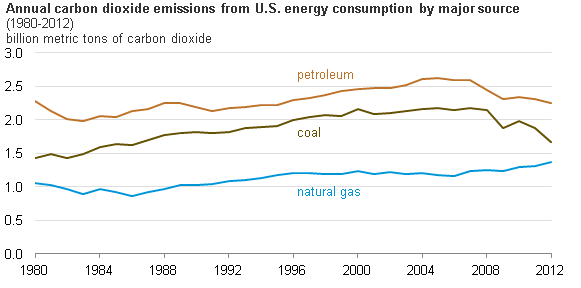
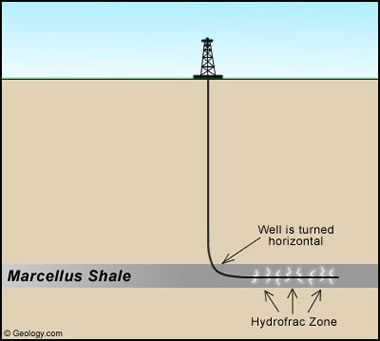 We know that the increased supply of natural gas in the US economy resulted from advances in, and the increased use of, hydraulic fracturing techniques, which unlock reserves that were previously inaccessible. We also know that hydraulic fracturing (fracking) techniques became economically viable because of the recent increase in energy prices. Higher prices created an incentive to invest in fracking. Fracking increased supply, which, along with innovations spurred by competition, resulted in lower natural gas prices, and that prompted energy producers to switch from coal to natural gas.
In other words, free markets succeeded where bloated, collectivist government mandates failed. In other words, American "greed" turned out to be more virtuous than multinational "virtue".
There is another, less rosy possible reason why the US's carbon emissions fell since 2007. The recession began in 2007, and the American economy remains weak. A weak economy results in reduced energy consumption and demand. But I don't think that was a major factor here. After all, Europe's economy is even weaker than that of the US, but all European nations failed to meet their Kyoto goals.
The lesson here is one sensible people learned when they saw the devastation the Soviet Union caused to its environment - free markets work, even in environmental matters.
But don't expect "Environmentalists" to embrace free market solutions to environmental problems. "Environmentalists" are, for the most part, watermelons - green on the outside, red on the inside. Environmental concerns are an excuse for them to give government even greater power over people's lives. No matter how well free market solutions prove to work, most "Environmentalists" will always reject them, because their main concern is not the environment. Their main concern is bloated, morbidly obese, inescapable government.

No comments:
Post a Comment